 By
By 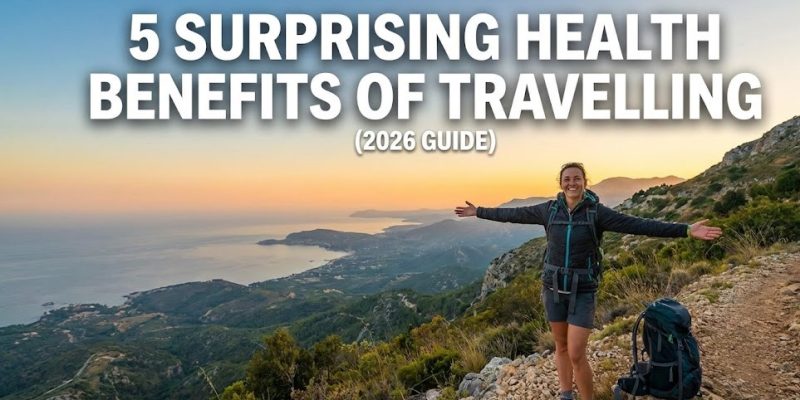
Let’s be completely candid: it is incredibly easy to view a vacation as an unnecessary luxury or a guilty pleasure that distracts from your career. However, treating travel as a mere “indulgence” is a massive misconception.
In a world where burnout and chronic stress are at an all-time high, stepping away from your daily routine is an essential investment in your physical and mental wellbeing. From actively lowering your risk of heart disease to rewiring your brain for happiness, science proves that booking that flight is actually good for your health.
Here is a straightforward, research-backed breakdown of the top 5 ways travelling drastically improves your mind and body.

At a Glance: How Travel Heals
| The Health Benefit | The Science Behind It |
| 1. Relieves Chronic Stress | Removing yourself from daily triggers immediately lowers cortisol levels, and the relaxation effect lasts for weeks post-trip. |
| 2. Lowers Depression Risk | Clinical studies show that women who vacation frequently are significantly less likely to suffer from depression. |
| 3. Boosts Overall Happiness | The psychological anticipation of planning a trip spikes dopamine levels before you even pack a bag. |
| 4. Increases Physical Activity | Exploring new cities forces you to walk far beyond your normal daily step count. |
| 5. Reduces Heart Disease Risk | Regular vacations actively lower your risk of cardiovascular events and heart attacks. |
The Mental Health Benefits of Escaping
Taking care of your mental health requires more than just trying to “think positive” at your desk. Changing your environment has profound psychological effects.
1. It Radically Relieves Stress
Who doesn’t feel more relaxed when sipping a fruity drink next to a pool? But the benefits go deeper than the surface. According to the American Psychological Association (APA), removing yourself from the environments and activities that cause you chronic stress gives your nervous system a chance to recover. Studies show that even after you return to your normal work routine, your baseline stress levels remain significantly lower for weeks.
2. It Lowers the Risk of Depression
While severe depression often requires medical intervention, lifestyle changes play a massive role in mental health management. A famous clinical study published by the National Institutes of Health (NIH) analyzed women living in Wisconsin. The researchers found that women who vacationed at least twice a year were significantly less likely to suffer from chronic depression and stress than those who vacationed less than once every two years.
3. It Boosts Happiness Through Anticipation
You do not have to wait until you reach the beach to feel the benefits. A well-known psychological study from Cornell University proved that the mere act of anticipating an experiential purchase (like planning a trip) brings substantially more happiness than anticipating buying a physical good. Discussing destinations and building an itinerary gives your brain a sustained dopamine boost to help you tackle the mundane realities of daily life.

The Physical Health Benefits of Exploring
While you might associate vacations with lounging, travel naturally disrupts the sedentary lifestyle of the modern office worker.
4. It Encourages Effortless Physical Activity
It is incredibly easy to fall into a physical rut when you are stuck at home. However, when you travel, you are naturally active. Whether you are swimming, hiking a trail, or simply taking a walking tour of a new European city, you are likely meeting the Centers for Disease Control and Prevention (CDC) guidelines for weekly physical activity without even realizing you are exercising.
5. It Reduces the Risk of Heart Disease
This is perhaps the most shocking benefit: taking a holiday can literally save your life. Data from the landmark Framingham Heart Study tracked individuals over decades and found incredible cardiovascular benefits to time off. The study noted that men who skipped taking an annual vacation increased their risk of heart disease by up to 30%, and increased their overall risk of death by 20%. Similarly, women who vacationed regularly had a significantly lower risk of suffering a heart attack.
The Bottom Line
There will always be an excuse to delay a trip—whether it is a heavy workload, budget concerns, or simple procrastination. But the research is undeniable: a trip away is one of the absolute best remedies for your mental and physical wellbeing.
Stop viewing your PTO as a luxury, and start treating it as preventative healthcare. Let’s get that trip booked!
Also Read : 8 Best Waterfalls in Bali for Adventurers in 2026