 By
By 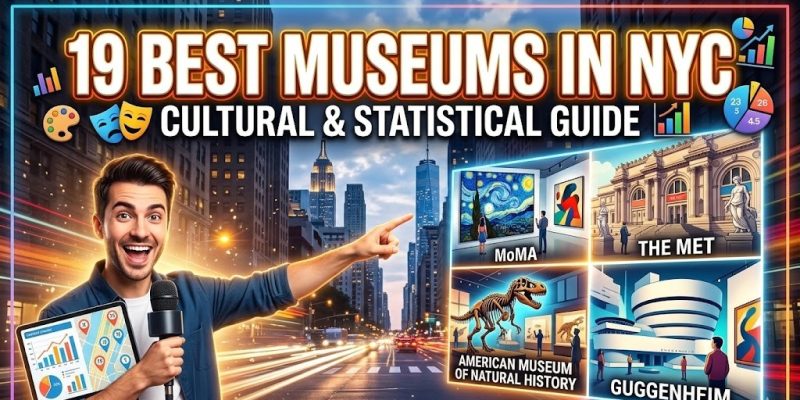
New York City remains the premier global hub for cultural exploration, boasting over 140 museums across its five boroughs. These institutions do more than display art; they serve as repositories for the city’s complex demographic history and evolving social landscape.

🎨 The “Big Three” of Manhattan
These institutions represent the pinnacle of global art collections and are the most visited cultural sites in the United States.
| Museum | Focus | Size / Collection Count |
| The Met | 5,000 years of global art. | 1.5 million+ objects; 2 million sq. ft. |
| MoMA | Modern and contemporary masterpieces. | 200,000+ works of modern art. |
| AMNH | Natural history and science. | 33 million specimens and artifacts. |
🔍 NYC Museum Demographics and Representation
In 2026, the conversation around NYC museums heavily involves representation and accessibility. Data from the NYC Department of Cultural Affairs (DCLA) and independent studies highlight the following:
-
Diversity in Leadership: As of the most recent 2023-2025 survey cycles, approximately 35% of NYC cultural organization employees identify as people of color. While this is an increase from 33% in 2019, it still trails the city’s overall population, which is roughly 68% non-white (Black, Hispanic/Latino, Asian, and Multiracial).
-
The Tenement Museum Impact: Located in the Lower East Side, this museum tells the stories of over 7,000 immigrants from over 20 nations who lived at 97 Orchard Street.
-
Brooklyn Museum Diversity: One of the most diverse large-scale institutions, its 2024 visitorship stats show that 40% of its audience identifies as non-white, significantly higher than the national museum average of 23%.
-
Economic Impact: NYC museums contribute over $25 billion annually to the local economy and support roughly 190,000 jobs.
🏛️ 5 Must-Visit Niche Museums
-
Ellis Island National Museum of Immigration: Retraces the steps of the 12 million immigrants who entered the U.S. between 1892 and 1954. Approximately 40% of current U.S. citizens can trace at least one ancestor to Ellis Island.
-
Louis Armstrong House Museum: Preserves the legacy of the jazz legend. Its archives hold 1,600 recordings and 5,000 photographs.
-
The Met Cloisters: The only museum in the U.S. dedicated exclusively to the art and architecture of the Middle Ages, set within 4 acres of Fort Tryon Park.
-
National September 11 Memorial & Museum: Houses 60,000 artifacts and honors the 2,977 victims of the 2001 attacks.
-
MoMA PS1: Unlike its parent institution, PS1 is a non-collecting institution, meaning it rotates 100% of its art to focus exclusively on emerging contemporary artists.

🔗 Expert Travel & Culture Resources
-
NYC Department of Cultural Affairs: Workforce Demographics: Official data on racial and gender diversity within the city’s cultural sector.
-
The Metropolitan Museum of Art: Plan Your Visit: Essential info on ticket prices (including the “Pay What You Wish” policy for NY residents).
-
National Park Service: Statue of Liberty & Ellis Island: Information on ferry schedules and retrace-your-heritage databases.
-
American Alliance of Museums: Trends Watch 2026: A deep dive into how technology and social shifts are changing the museum experience.
-
Brooklyn Museum: Current Exhibitions: Stay updated on the latest installations focused on social justice and modern identity.
Conclusion
New York City’s museums offer a profound look into the human experience, from the 12 million stories at Ellis Island to the 1.5 million masterpieces at The Met. In 2026, these institutions are increasingly focused on reflecting the city’s true diversity—both in the art they hang and the people they employ. Whether you’re exploring the living history of Staten Island or the jazz archives of Queens, the city’s cultural landscape remains an unmatched educational journey.
Also Read: Chicago 2026: The Ultimate Guide to the Second City’s Golden Era