 By
By 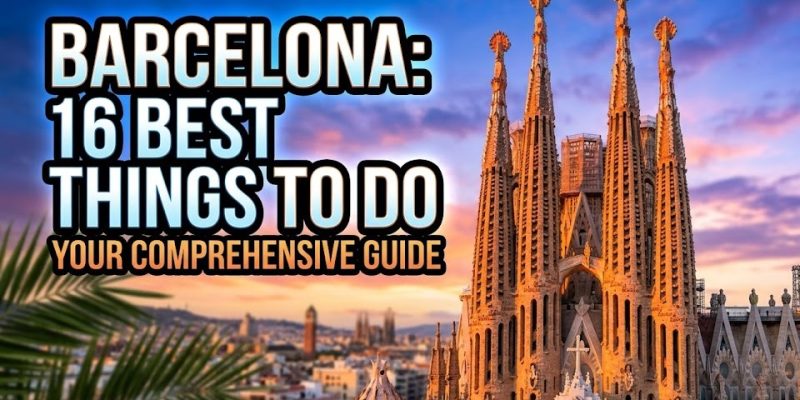
As the vibrant capital of Catalonia, Barcelona is a city where ancient Roman history, medieval gothic architecture, and pioneering modernist design collide. To help you maximize your visit, we have deeply expanded upon The Travel Intern’s original guide, injecting historical context, architectural background, and local cultural nuances into this definitive itinerary.

The Masterpieces of Antoni Gaudí
You cannot understand Barcelona without understanding Antoni Gaudí, the figurehead of Catalan Modernisme. His highly individualized, organic style transformed the city’s skyline.
-
Sagrada Família: The world’s largest unfinished Catholic church. Construction began in 1882, and Gaudí dedicated the last 40 years of his life to it. The interior columns are designed to mimic a massive forest canopy reaching toward the light. It is heavily reliant on private donations and ticket sales for its ongoing construction.
-
Park Güell: Originally conceived in 1900 as a highly exclusive, luxury housing estate for the Catalan bourgeoisie, the project failed financially and was eventually sold to the City Council in 1922. Today, it is a World Heritage Site famous for its trencadís (broken mosaic tile) designs, the Greek Theatre, and the iconic Dragon Stairway.
-
Casa Batlló: Locally known as Casa dels ossos (House of Bones) due to its visceral, skeletal organic architecture. There are virtually no straight lines in the building; every window, door, and glimmering scaled roof tile was designed to mimic the fluid forms of nature.
-
Casa Milà (La Pedrera): Meaning “The Stone Quarry,” this was built between 1906 and 1912. It was highly controversial at the time for its undulating stone facade and twisting, wrought-iron balconies. Its rooftop features chimney stacks designed to look like medieval warriors.
-
Casa Vicens: Gaudí’s very first major residential project (commissioned in 1883). Unlike his later organic works, Casa Vicens is famous for its heavy Moorish (Mudéjar) and Orientalist influences, featuring striking, vibrant geometric tile work.
History, Parks, and Hidden Gems
Beyond the famous modernist facades, the city boasts a deeply layered history spanning back to the Roman Empire.
-
The Gothic Quarter (Barri Gòtic): This is the historic center of the old city of Barcelona, built upon the ruins of the ancient Roman settlement of Barcino. Its labyrinthine medieval streets house the Cathedral of Barcelona, the Bishop’s Bridge, and historic haunts like Els Quatre Gats—a cafe where a young Pablo Picasso held his early exhibitions.
-
Carmel Bunkers: Located at the top of Turó de la Rovira hill (262 meters high), this site offers the best 360-degree panoramic views of the city. Despite the name, they were never actual bunkers; they were anti-aircraft batteries built in 1937 to defend the city against bombings during the Spanish Civil War.
-
Tibidabo Amusement Park: Perched on the Serra de Collserola mountain range, this is one of the oldest functioning amusement parks in the world (opened in 1899). It is crowned by the magnificent Temple of the Sacred Heart of Jesus, which dominates the city skyline at night.
-
Parc de la Ciutadella: Built in the mid-19th century on the site of a demolished military citadel, this park acts as the city’s green lung. It features the Cascada Monumental, a grand fountain inspired by Rome’s Trevi Fountain, which was designed by Josep Fontserè with the assistance of a young Gaudí.
-
Barceloneta Beach: Before the 1992 Summer Olympics, Barcelona’s waterfront was largely industrial. The city completely revamped the coastline, creating this bustling, sandy stretch now famous for water sports, calisthenics, and vibrant beachfront dining.
Markets, Shopping, and Vintage Finds
Barcelona is a premier retail destination, blending ultra-modern fashion with centuries-old market traditions.
-
La Rambla: A bustling, 1.2-kilometer tree-lined pedestrian boulevard connecting Plaça de Catalunya to the Christopher Columbus Monument at Port Vell.
-
Mercat dels Encants: Tracing its origins back to the 14th century, this is one of Europe’s oldest continuous flea markets. In 2013, it was moved under a stunning, modern mirrored canopy. It is a treasure trove for antique furniture, vintage cameras, and secondhand clothing.
-
Vintage Shopping Districts: The streets of Carrer de Tallers and Carrer de la Portaferrissa (located in the El Raval neighborhood) are havens for vintage fashion, featuring stores like Flamingo Market Kilo and Bogo Vintage.

The Culinary Landscape: Catalan Cuisine
Catalan gastronomy is deeply rooted in Mediterranean traditions, heavily utilizing olive oil, fresh seafood, and cured meats.
-
Tapas and Vermouth: Participating in la hora del vermut (vermouth hour) is a cultural staple. Locals gather at spots like Morro Fi to drink fortified wine paired with croquettes, mussels, and olives before lunch.
-
Historic Eateries: Can Culleretes is officially the oldest restaurant in Barcelona, operating since 1786. Gelida has been serving affordable, hearty Catalan dishes (like roasted pork knuckle) since 1946, while Fabrica Moritz has been brewing beer in the city since 1856.
-
Mercat de la Boqueria: The most famous of Barcelona’s 39 active food markets, located right on La Rambla. It features fresh produce, cured jamón ibérico, and lively seafood bars like Ramblero.
-
Desserts: Traditional treats include fresh churros dipped in thick, hot chocolate (highly recommended at Churrería Laietana) and inventive, artisanal gelato at shops like DelaCrem.
Logistics: Navigating the City
Barcelona is famously easy to navigate thanks to the Eixample district’s visionary grid system, designed by urban planner Ildefons Cerdà in the 1850s to alleviate overcrowding. The public transit network is incredibly efficient.
| Ticket Type | Target User | Features & Cost |
| T-casual | Solo Travelers | Provides 10 individual rides across the network for roughly €11.35. |
| T-familiar | Families & Groups | Provides 8 journeys that can be shared among multiple people for €10.00. |
| Hola Barcelona | Heavy Explorers | Unlimited rides for 48, 72, 96, or 120 hours, starting from €16.40. |
Also Read : 10 Best Places to Visit in Mexico (My Rankings)