 By
By 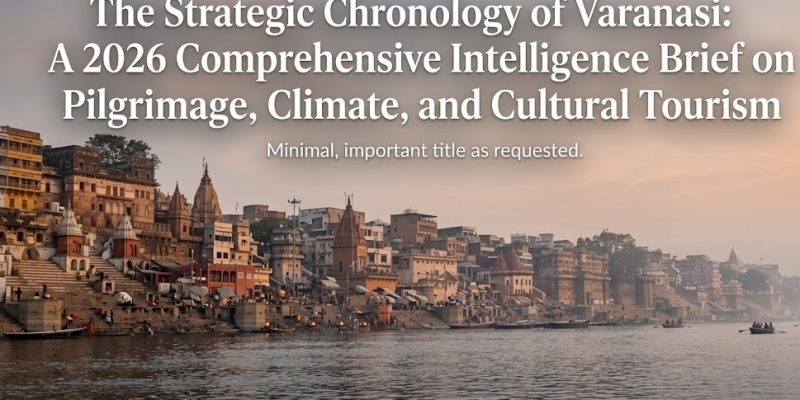
The ancient city of Varanasi (historically Kashi or Banaras) represents one of the oldest continuously inhabited urban settlements on Earth. In 2026, it stands at the complex intersection of ancient eschatological tradition and modern hyper-tourism. Deciding the optimal time to visit this sacred geography requires far more than a simple weather check; it demands an understanding of regional meteorological mechanics, the economic cycles of the handloom industry, and the infrastructural carrying capacity during mega-festivals. This intelligence brief deconstructs the climatic, economic, and sociocultural layers of Varanasi to provide a definitive, master-level guide to timing your immersion into India’s spiritual capital.
1. Historical Context and the Evolution of Spiritual Tourism
To understand the temporal dynamics of Varanasi, one must recognize its foundational evolution. For millennia, Kashi has been the ultimate destination for Hindu Pilgrimage, fundamentally driven by the pursuit of Moksha (liberation from the cycle of rebirth). Historically, the city’s visitor demographic was heavily skewed toward ascetics and those in the final stages of life. However, over the late 20th and early 21st centuries, the paradigm shifted towards comprehensive Cultural tourism. By 2026, the city is as coveted by global photographers, textile connoisseurs seeking authentic Banarasi weaves, and cultural academicians as it is by traditional devotees. This dual identity—a city for the dying and a vibrant cultural hub for the living—dictates its complex seasonal calendars and festival cycles.
2. Meteorological Mechanics and the Humid Subtropical Reality
Varanasi operates under a rigorous Humid subtropical climate (Köppen climate classification Cwa), defined by extreme thermal and hydrologic variations.
-
The Thermal Extremes (Summer/Winter): From mid-April to June, the region endures punishing heatwaves with peak temperatures frequently exceeding 45°C (113°F). Conversely, the December to mid-February window brings sharp temperature drops, plunging as low as 4°C, accompanied by dense radiation fog that blankets the Ganges.
-
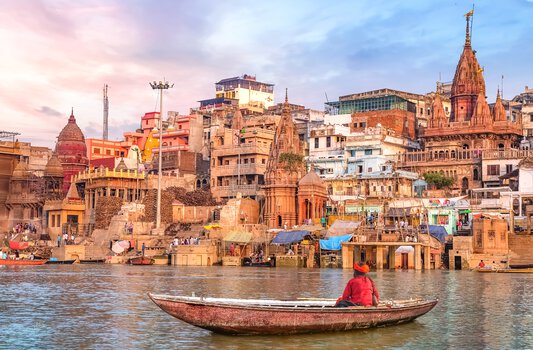
The Hydrologic Disruption (Monsoon): Between July and September, the Monsoon of South Asia dramatically alters the city’s topography. The Ganges swells, fully submerging the iconic stone Ghats (riverfront steps). This hydrologic surge renders boat rides highly dangerous and effectively cuts off pedestrian access along the riverfront, fundamentally paralyzing the city’s primary tourist artery.
-
The Optimal Windows: Therefore, the mechanical “sweet spots” for thermal comfort and topographical access are Autumn (Mid-October to November) and Spring (Mid-February to Mid-April).
3. Economic Impact and the Textile Micro-Economy
The influx of visitors to Varanasi is inextricably linked to the region’s Gross domestic product, heavily anchored by spiritual tourism and the heritage handloom sector. The Autumn and Spring tourist peaks serve as the primary economic engines for the city’s master weavers. Visitors drawn by the pleasant weather and festivals (like Dev Deepawali) become the primary consumers of high-ticket Banarasi saris and luxury textiles. Local institutions, such as Holyweaves, rely on this seasonal influx to sustain the intricate supply chain of silk weaving. Furthermore, the recent infrastructural upgrades, notably the Kashi Vishwanath Corridor, have exponentially increased the daily carrying capacity of the city, turning religious milestones into massive, monetized economic events that sustain the livelihoods of thousands of artisans, boatmen, and hoteliers.
4. Sociocultural and Behavioral Implications of Mega-Festivals
The timing of your visit fundamentally alters the sociocultural reality you will experience.
-
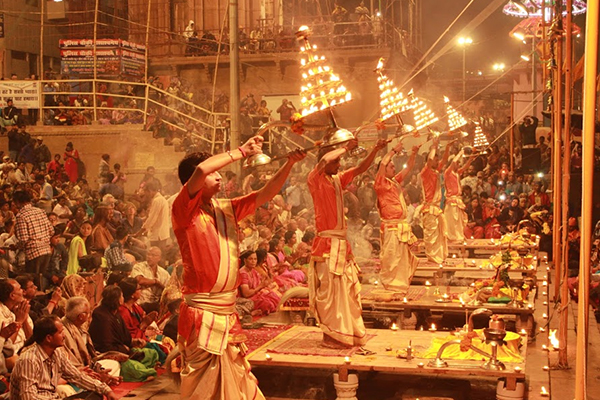
Dev Deepawali (Autumn): Occurring 15 days after Diwali, this festival transforms the Ghats with millions of earthen lamps. However, it also introduces acute urban congestion. The behavioral shift of tourists in 2026 shows a growing preference for curated, intellectual micro-festivals—such as the Mahindra Kabira Festival—over the overwhelming crowds and LED-light cacophony of mass religious gatherings.
-
The Saavan Phenomenon (Monsoon): During the monsoon months, the city is flooded by Kaanwariyas—devotees of Lord Shiva. This introduces massive, unstructured foot traffic, prompting city-wide vehicular diversions. Understanding these sociocultural tides is vital; visiting during these peaks requires a high tolerance for sensory overload and logistical friction.
5. Regulatory, Ethical, and Ecological Frameworks
Varanasi in 2026 sits at the center of intense ecological and ethical debates. The sheer volume of human convergence during peak seasons places unprecedented strain on the Ganges. The regulatory frameworks governing the city must balance the constitutional right to religious assembly with stringent environmental mandates. Initiatives to curtail plastic use, regulate motorized boat emissions, and manage the bio-load of millions of pilgrims bathing in the river are strictly enforced during peak windows like Maha Shivratri and Kartik Poornima. The ethical traveler in 2026 must navigate the fine line between participating in heritage and contributing to the ecological degradation of one of the world’s most sensitive riverine ecosystems.
6. Competitive Analysis: The Strategic Travel Windows
When positioned against other global spiritual or cultural hubs (such as Kyoto, Mecca, or Jerusalem), Varanasi offers a highly volatile, uncurated experience. To extract the maximum value from a visit, strategic positioning is mandatory:
-
The “Golden Window” (Mid-Oct to Nov): This offers the highest return on investment for travelers. The post-monsoon water levels stabilize, the thermal index is comfortable, and the arrival of migratory Siberian birds adds a unique ecological layer to morning boat rides.
-
The “Sensory Window” (Dec to Mid-Feb): Ideal for culinary and atmospheric purists. The famous Malaiyyo (saffron milk-froth) is only available during this dew-heavy season, and the fog-shrouded Ghats offer unparalleled photographic opportunities, albeit requiring preparation for the biting cold.
7. Predictive Modeling and Future Outlook (2026–2030)
Looking toward 2030, predictive modeling indicates that Climate change will continue to compress Varanasi’s optimal travel windows. Extended, erratic monsoons and increasingly brutal summer heat domes will likely force the tourism industry to pivot. We anticipate the rise of “Hyper-Scheduled Micro-Tourism,” where AI-driven crowd forecasting will dictate when high-net-worth travelers visit, avoiding peak congestion days altogether. Furthermore, the integration of the handloom sector into the digital economy will allow tourists to explore weaving studios via virtual reality during the hostile summer months, reserving physical visits strictly for the narrow, temperate windows of late Autumn and early Spring.
Conclusion
The strategic analysis of Varanasi reveals a city whose accessibility and experiential quality are dictated by extreme meteorological pendulums and massive sociocultural tides. While the city’s spiritual resonance remains a constant 365 days a year, the physical reality of navigating its labyrinthine alleys and riverfronts is highly variable. For the modern traveler, academic, or textile enthusiast in 2026, the definitive verdict is to target the Autumn (Mid-October to November) or Spring (Mid-February to March) corridors. By meticulously aligning your visit with these periods, you mitigate the paralyzing heat and hydrologic disruptions of the extremes, ensuring that your encounter with Kashi is defined by profound cultural absorption rather than infrastructural endurance.
Also Read : The Ultimate Guide to the 25 Must-Visit Destinations in South America