 By
By 
I’ve hiked the Kalalau Trail three times now, and it’s one of my favorite hikes in Hawaii. It’s an epic coastal trek on the island of Kauai that’s usually done in 3 days and 2 nights.
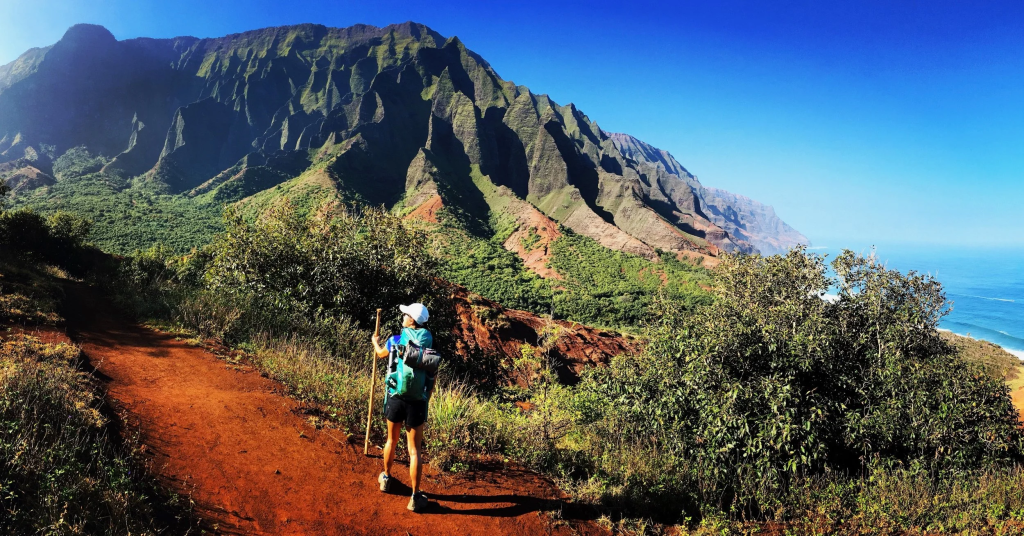
This adventure has it all: jungles, beaches, waterfalls, and the towering green cliffs of the Na Pali coast—the perfect place to camp! It’s also a notoriously long and tough hike with some risks involved, so permits are strictly required.
Even so, it’s a very special experience that’s worth any of the hassle that may stand in your way. In this blog post, I’ll explain everything you need to know about the Kalalau Trail, how to prepare, and what to expect in 2026.
Quick Stats*
- Distance: 22 miles (35 km)
- Elevation Gain: 6,500 ft (1,980 m)
- Duration: ~3 days
- Difficulty: Hard
*These are total stats for the roundtrip trek.
Full Trail Description: Step-By-Step
Mile 0–2: Ke’e Beach to Hanakapi’ai Beach
The hike begins at Ke’e Beach with a steady climb along a rocky and muddy trail. The start of the hike is actually the muddiest part of the whole route. You’ll get your first good views of the Na Pali coast at approximately 1.2 miles, and sometimes in the winter, you can even see whales spouting in the distance.
Next, the trail descends to Hanakapi’ai Beach where you will cross your first stream. Sometimes it’s better to take your shoes and socks off and wade through rather than trying to hop boulders; otherwise, you run the risk of falling in and getting all your gear wet.
Detour: After the stream, there’s an optional spur trail to Hanakapi’ai Falls. That detour adds 3.4 miles roundtrip, so you’ll probably want to save your energy and think about doing it on the way back.
Mile 2–6: Hanakapi’ai Beach to Hanakoa Valley
Past the beach, there’s another ascent, and the trail becomes noticeably more rugged and narrow, with thick foliage on both sides. The bushes may occasionally hide steep drop-offs, so don’t get too careless. Along the way, you’ll often hear the buzz of helicopter tours overhead.
Eventually, you’ll pass through a gate at Space Rock (the highest point of the trail), followed by two smaller stream crossings (Ho’olulu and Waiahuakua). You will then reach the Hanakoa Valley camping area. Note: It gets very buggy here. ### Mile 6–9: Crawlers Ledge to Kalalau Valley Rim The section after Hanakoa is one of the most treacherous parts of the hike. It’s not highly technical, but it can be scary. There’s an awkward descent on a slippery dirt path, followed by the infamous Crawlers Ledge.
The path here is slightly wider than a person, with a rock wall on one side and steep drop-offs into the ocean on the other. You’ll have plenty of traction as long as you walk slowly and hug the wall. After Crawlers Ledge, the trail continues across high ridges with expansive views of the Na Pali coast.
Mile 9–11: Kalalau Valley Rim to Kalalau Beach
At this point, the trail begins a long descent toward Kalalau Valley, offering sneak peeks of the beach far below. These are the best views of the whole hike, but fatigue really sets in here.
There’s one more stream to cross, and then you arrive at the majestic Kalalau Beach, surrounded by towering cliffs. Welcome to paradise! There are plenty of sites to pitch a tent among the trees, and there’s even a little waterfall (Ho’ole’a Falls) you can use to shower.
The Kalalau Permit System & Logistics
A permit is legally required to hike and camp past the 2-mile mark.
- Overnight Camping Permits: These are issued via the Hawaii DLNR Camping Portal. Permits open exactly 90 days in advance and sell out within minutes during peak season.
- Day-Use & Parking: If you are only hiking the first 2 miles to Hanakapi’ai Beach, you just need a day-use reservation and parking permit from Go Haena.
- Getting There: The trailhead is at Ke’e Beach. Because overnight parking is extremely limited, many hikers use the North Shore shuttle system or arrange a private drop-off. Do not leave valuables in your car, as break-ins are common.
What To Bring: The Complete Packing List
- Backpack: A 40-65L pack is ideal for a 3-day trek. Make sure it has a waterproof cover.
- Shelter & Sleep System: A lightweight, waterproof tent, a compact sleeping pad, and a lightweight sleeping bag (nights can get surprisingly chilly).
- Clothing: Moisture-wicking shirts, quick-dry shorts, a rain jacket, a swimsuit, and a change of dry clothes for sleeping.
- Footwear: Sturdy hiking boots with deep traction, high-quality wool socks, and a pair of camp sandals to let your feet breathe at the beach.
- Cooking Gear: A lightweight backpacking stove (like an MSR PocketRocket), gas canisters (must be bought on the island), a spork, and freeze-dried meals like Mountain House.
- Water & Filtration: Start with at least 2-3 liters in a hydration bladder. You must filter all stream water to avoid leptospirosis. Bring a LifeStraw, Sawyer Squeeze, or purification tablets.
- Drink Mixes: You’ll be sweating like crazy. Bring hydration powders (like Liquid I.V.) to replace lost electrolytes.
- First Aid Kit: Blister care (moleskin), bandages, antiseptic, and ibuprofen are non-negotiable.
- Sun & Bug Protection: Reef-safe sunscreen, a wide-brim hat, sunglasses, and DEET-free insect repellent.
- Headlamp: Bring extra batteries. You will need this for navigating camp at night.
- Hygiene: A backcountry trowel, toilet paper (in a Ziploc bag), hand sanitizer, and biodegradable camp soap.

⚠️ 2026 Trail Safety & Real-Time Weather Warnings
If you are planning to hike the Kalalau Trail in early to mid-2026, you must be aware of the intense weather conditions.
- Winter Weather Closures: As of February 2026, the Hawaii Division of State Parks has issued multiple emergency closures for the Kalalau Trail due to severe weather, high winds, and flash flooding. Always check the official site for red alerts the morning of your hike.
- Flash Floods: Never cross a flooded stream. Hawaii’s streams can quickly become deep, muddy torrents. If the water is rushing hard or is above your knees, shelter in place and wait for it to recede.
- No Cell Service: There is zero cellular reception on the trail. You are entirely on your own. Pack a satellite messenger (like a Garmin inReach) if possible.
Conclusion
Hiking the Kalalau Trail is not for the faint of heart, but it rewards those who brave its muddy switchbacks and dizzying ledges with some of the most untouched, breathtaking scenery on earth. By securing your permits early, packing smartly, and respecting the unpredictable Hawaiian weather, you will be setting yourself up for the backpacking trip of a lifetime. Stay safe, leave no trace, and enjoy the Na Pali coast!
Also Read : Top Solo Travel Tips for Safer, Smarter Adventures