 By
By 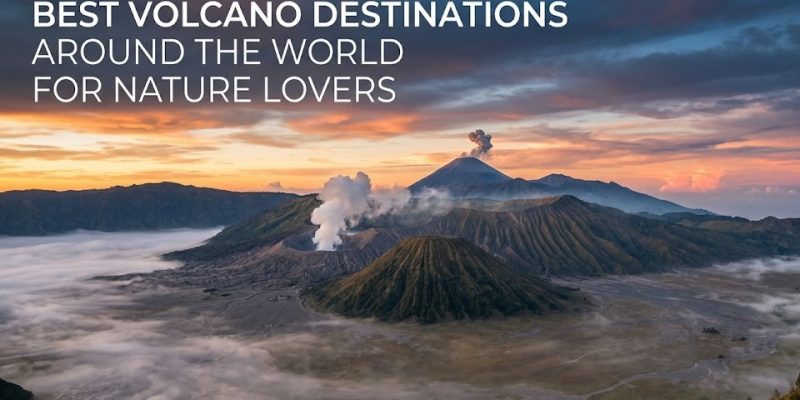
Volcano tourism—often called “lava chasing”—continues to attract travelers, geography students, and nature enthusiasts eager to see powerful geological landforms up close. From active smoke plumes to massive, quiet craters, both active and dormant volcanoes offer some of the most dramatic landscapes on Earth. This guide explores top volcanic sites across Iceland, Costa Rica, Italy, and the Azores, highlighting their distinct geographical features and key travel safety tips.
Active Volcanoes to Visit
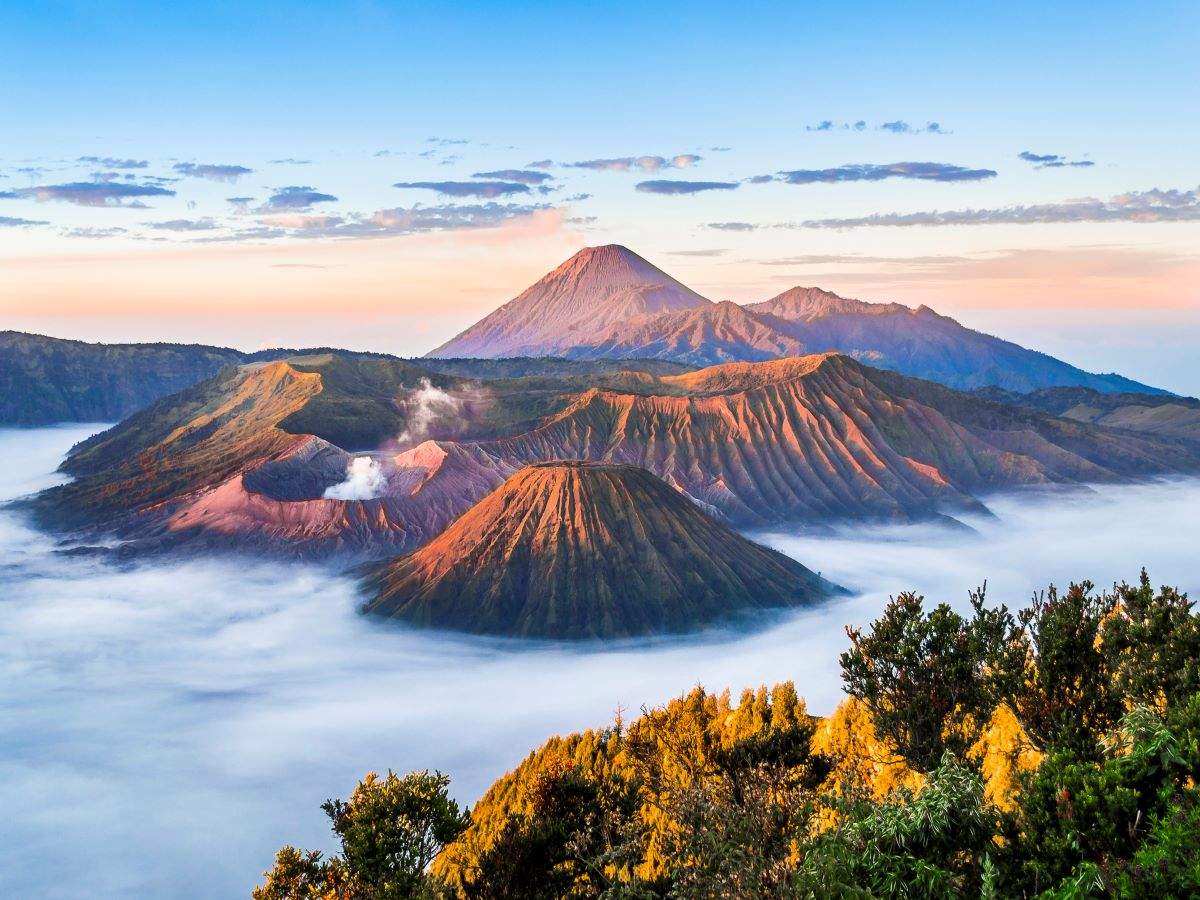
Active volcanoes provide a rare opportunity to witness living geology, from steaming vents to fresh fields of black, solidified lava.
-
Arenal Volcano, Costa Rica: This 1,633-meter andesitic stratovolcano is famous for its history of near-daily smoke and lava eruptions up until 2010. While its activity has slowed since then, visitors can still see ash plumes rising from the top. The surrounding national park is a popular spot for rainforest hikes, horseback riding, and whitewater rafting.
-
Eyjafjallajokull, Iceland: This subglacial stratovolcano stands 1,666 meters tall and made global headlines in 2010 when its massive ash plume disrupted air travel around the world. Today, it stands as a major tourist destination where adventurers can hike directly to the historic eruption site.
-
Mount Etna, Italy: Located in Sicily, Mount Etna is a protected UNESCO World Heritage site rising 3,329 meters high. It features three distinct ecological zones, each with unique vegetation. For ease of access, a cable car can transport visitors up to the 2,500-meter mark to view its classic strombolian activity.
-
Stromboli, Italy: Part of the Aeolian Islands, Stromboli is famous for its regular, minor eruptions that release glowing lava into the night sky, earning it the nickname “Lighthouse of the Mediterranean.” Taking a boat tour at night offers a great view of these natural lava fireworks.
-
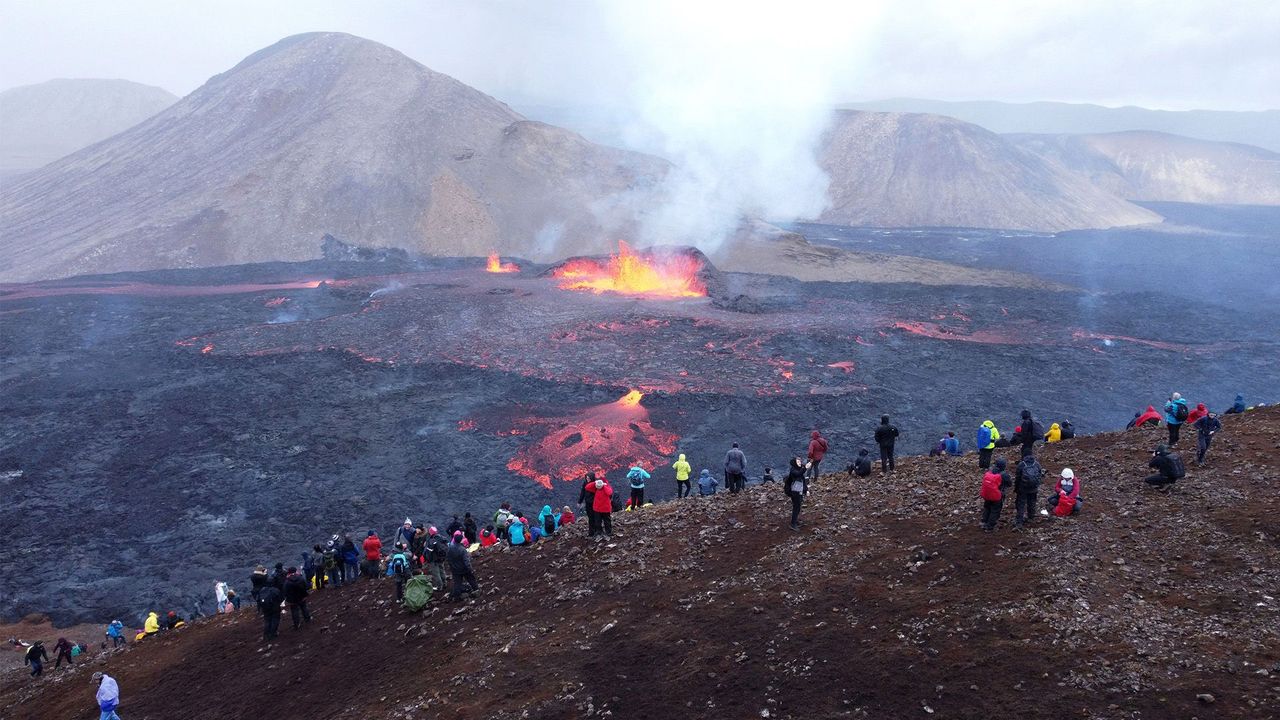
Fagradalsfjall, Iceland: Situated on the Reykjanes Peninsula, this shield volcano awoke in 2021 after being dormant for 800 years. While active lava rivers are no longer flowing, the site features a vast, altered landscape of fresh black lava that can be explored via hiking trails, guided walks, or helicopter tours.
Non-Active and Dormant Volcanoes to Visit
Dormant and non-active volcanoes allow travelers to explore the deep internal structures, mineral lakes, and caves left behind by ancient eruptions.
-
Thrihnukagigur, Iceland: A true geologist’s dream, this unique site features the only accessible magma chamber in the world. Visitors can take a lift down 212 meters into the heart of the volcano to explore perfectly preserved, colorful rock formations created 4,000 years ago.
-
Sete Cidades Massif, The Azores: This large volcanic complex houses the famous “Lake of the Seven Cities.” The site features two connecting lakes that display distinct blue and green colors due to differences in the surrounding volcanic minerals, making it a beautiful stop for scenic views.
-
Mount Pico, The Azores: Standing at 2,351 meters, Mount Pico is the highest peak in Portugal. Permanent steam vents rise from its main crater, and the mountain is home to one of the largest underground lava tubes in the world, rewarding hikers with panoramic views of the island.
Volcano Selection Matrix
This matrix organizes popular volcanoes by their location, current activity type, and main geographical highlights.
| Volcano Name | Geographic Location | Activity Status | Key Geographical Feature |
| Arenal | Costa Rica | Active (Last erupted 2010) | Classic steep cone shape with active ash plumes. |
| Eyjafjallajokull | Iceland | Active (Last erupted 2010) | Subglacial stratovolcano sitting on a constructive plate boundary. |
| Mount Etna | Italy | Active (Regular minor activity) | Three unique ecological vegetation zones and a visitor cable car. |
| Fagradalsfjall | Iceland | Active (Last erupted 2021) | Fresh black fields of solidified lava from a recent 2021 flow. |
| Thrihnukagigur | Iceland | Dormant (Last erupted 4,000 years ago) | The world’s only accessible internal magma chamber. |
| Sete Cidades | The Azores | Dormant (Last erupted 1880) | Vibrant blue and green mineral twin lakes sitting in the main crater. |
Essential Safety Tips for Volcano Travel
While popular volcanic sites are heavily monitored by scientists and local authorities, visiting these landscapes requires careful planning and caution:
-
Wear Appropriate Gear: Always wear sturdy, thick-soled hiking boots to safely navigate sharp, uneven volcanic rock and hot ground. Layer your clothing to prepare for sudden wind and temperature drops at high altitudes.
-
Check Local Safety Updates: Before heading out to an active volcanic area, check current safety alerts and trail conditions with local authorities. Respect all trail closures and stay behind designated safety barriers.
-
Monitor Weather Conditions: High mountain peaks and coastal volcanic fields can experience sudden shifts in weather. Heavy fog, rain, or toxic gas buildup can roll in quickly, making visibility poor and hiking paths dangerous.
Conclusion
Volcano tourism offers a direct look at the powerful forces that continue to shape our planet. Whether you are trekking across the fresh lava fields of Fagradalsfjall or peering into the twin lakes of Sete Cidades, these destinations provide unforgettable travel experiences. By choosing the right gear and keeping track of local safety updates, you can safely explore these dramatic landscapes on your next adventure.
Also Read :Travel Architecture: Strategic Breakdown of the World’s Best Lakes