 By
By 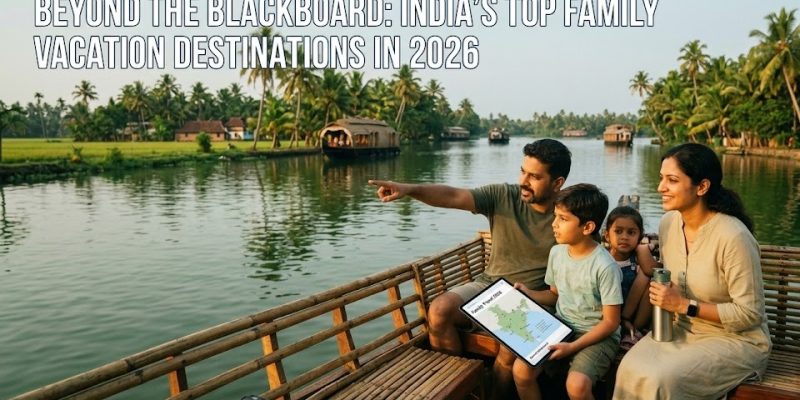
the landscape of Indian travel has shifted significantly. We are no longer just looking for “sightseeing”; the modern Indian family is hunting for “shared immersion.” With domestic tourism in India projected to exceed 1.9 billion visits by the end of this year, the competition for the best family-friendly spots is high. Families now account for approximately 38% of all domestic leisure travel, with a notable surge in multi-generational trips involving grandparents.
From the snow-dusted peaks of the north to the spice-scented backwaters of the south, India offers a diverse playground for every demographic. Whether you are part of the 42% of Millennial parents prioritizing “edutainment” or simply looking to disconnect, here is the 2026 guide to the best family retreats.
Shimla, Himachal Pradesh: The Alpine Anchor
Shimla remains the undisputed “Queen of Hills” for families. In 2026, the Kalka-Shimla Toy Train, a UNESCO World Heritage site, remains the top-rated experience for children, offering a slow-motion immersion into the Himalayas.
-
Activities: Ice skating at the circular rink, trekking to Jakhoo Temple, and skiing in nearby Kufri.
-
Statistic: Himachal Pradesh saw a 15% increase in domestic family arrivals in 2025, with families from the North Indian plains (Delhi, Punjab, Haryana) making up 60% of the winter footfall.
-
Pro-Tip: Book heritage homestays to experience colonial architecture and local Himachali hospitality.
Goa: The Coastal Classroom
Goa has successfully rebranded itself from a party hub to a family sanctuary. In 2026, South Goa is the preferred choice for families, prized for its safe, shallow waters and silent beaches like Palolem.
-
Activities: Dolphin spotting, visiting the Dudhsagar Waterfalls, and spice plantation tours.
-
Demographic Data: International tourism in Goa has stabilized, with Western/Caucasian groups (UK and Russia) accounting for 22% of long-stay visitors, while domestic middle-class families contribute 70% of total state tourism revenue.
-
Growth: The family resort sector in Goa grew by a compound annual growth rate (CAGR) of approximately $8.4\%$ between 2024 and 2026.
Udaipur, Rajasthan: The Royal Retreat
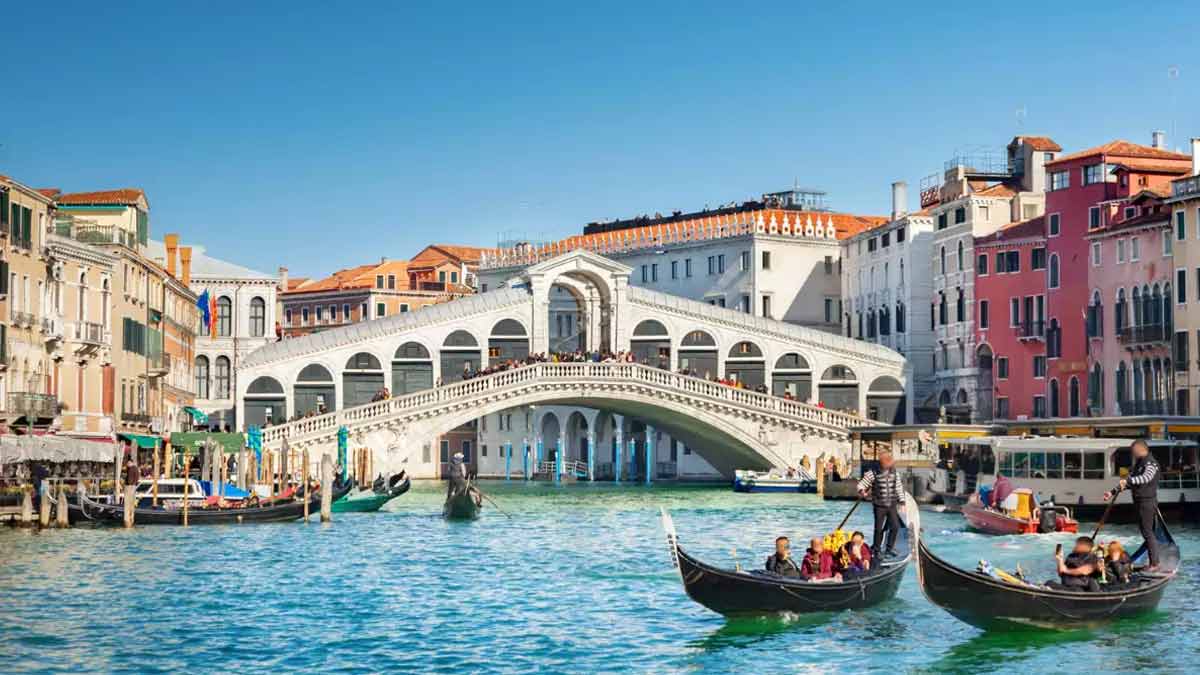
Udaipur, the “City of Lakes,” offers a regal experience that fascinates kids and adults alike. The combination of boat rides on Lake Pichola and puppet shows at Bagore Ki Haveli creates a living history lesson.
-
Activities: Exploring the City Palace, vintage car museum tours, and craft shopping at Shilpgram.
-
Market Insight: Udaipur’s heritage hotel occupancy reached 88% during the 2025-2026 peak season.
-
Group Statistics: Interestingly, East Asian tourists (primarily from Japan and South Korea) have become the fastest-growing international demographic in Udaipur, growing at 14% annually due to the city’s romanticized “Venice of the East” reputation.
Jim Corbett National Park: Wild Edutainment
For families who want to swap screens for binoculars, Jim Corbett National Park is the premier wildlife destination. It provides a rare opportunity to teach children about conservation and biodiversity.
-
Activities: Jeep safaris in the Dhikala zone, birdwatching, and stay-overs in eco-friendly jungle lodges.
-
Wildlife Stats: According to the most recent wildlife census, India’s tiger population has reached over 3,600, with Corbett hosting one of the highest densities.
-
Visitor Stats: Gen Z parents (those born 1997–2012) are the primary group booking “sustainable” wildlife tours, making up 25% of the adventure tourism segment in Uttarakhand.
Alleppey, Kerala: The Backwater Bond
Alleppey offers a unique “stationary travel” experience via houseboats. Gliding through the palm-fringed canals of Kerala’s Backwaters is a meditative experience for parents and a nature-spotting game for kids.
-
Activities: Houseboat stays, village walks, and tasting traditional Karimeen (pearl spot fish).
-
Houseboat Count: There are currently over 1,200 licensed houseboats in Alleppey, with 30% now converted to full solar-electric propulsion to meet 2026 “Green Kerala” mandates.
-
Demographic Breakdown: Kerala remains a favorite for South Indian families (primarily from Bengaluru and Chennai), who constitute 45% of the domestic travelers in the backwater circuit.
2026 Family Travel Statistics by Region/Demographic
| Destination Group | Primary Age Group | Avg. Group Size | Top International Demographic |
| Mountains (Shimla) | 5–15 (School Age) | 4.2 | UK/European (9.2%) |
| Beaches (Goa) | 2–10 (Toddlers/Kids) | 4.5 | Russian/CIS (12.5%) |
| Royal (Udaipur) | 10–18 (Teens) | 5.1 | US/Canada (11.8%) |
| Wildlife (Corbett) | 8–16 (Tween/Teens) | 3.8 | Australian (4.2%) |
| Cultural (Alleppey) | All Ages | 6.2 | Middle-Eastern (15.1%) |
Conclusion
In late March 2026, family travel in India is no longer just about the destination; it is about the return on investment in bonding. Whether you are navigating the snow in Shimla or the waves in Goa, these destinations provide the infrastructure and soul required for a multi-generational retreat. As domestic tourism visits continue to climb toward the 2 billion mark, planning ahead with digital permits for sites like Rohtang Pass or national parks is more essential than ever.
Also Read : Island Paradise Found: The 2026 Guide to the Best Time to Visit Maldives