 By
By 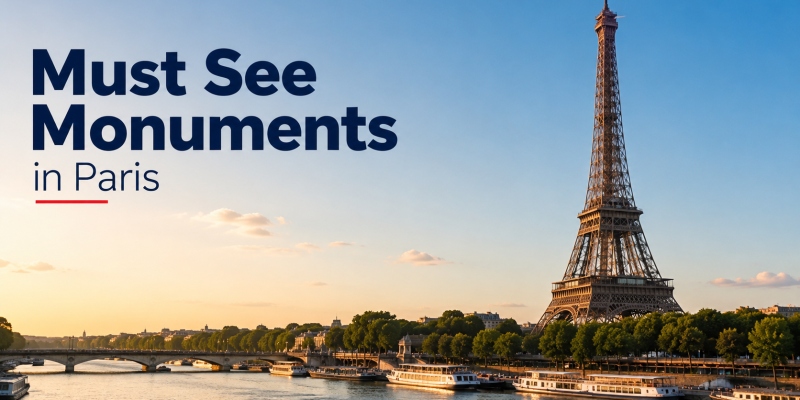
Paris functions as a massive, open-air archive of Western design history. The city’s twenty municipal districts (arrondissements) are organized around masonry vaults, geometric axes, and urban monuments that span from medieval Gothic architecture to late 19th-century industrial engineering. Exploring the French capital means tracking the evolution of structural engineering—analyzing how ruling dynasties and revolutionary republics used heavy stone, iron grids, and formal landscape design to project cultural and political authority.
When integrated into premium, priority-access exploration loops like the curated itineraries mapped by Insight Vacations, these structural icons change from static postcard backdrops into active design narratives. This architectural brief deconstructs the ten definitive monuments shaping the Parisian urban fabric, mapping their engineering milestones, artistic signatures, and historical preservation dockets.
Technical Mechanics: The Socio-Spatial Foundations of Parisian Architecture
To properly analyze the spatial configuration of Paris, architectural historians track three fundamental design and engineering breakthroughs:
-
The Iron Lattice Truss System: Prior to the late 19th century, achieving extreme building heights required thick, structural stone bases to absorb compressive forces. The introduction of high-purity puddle iron allowed engineers to build self-supporting, open-lattice frameworks. This system distributes lateral wind loads evenly across four curved foundational piers, eliminating the need for solid masonry load-bearing walls.
-
The Gothic Skeletal Framework: The transition away from heavy Romanesque stonework was driven by the invention of the pointed arch, the ribbed vault, and the flying buttress. Working as an external skeletal support system, these architectural elements redirect the immense downward and outward thrust of a building’s roof away from the walls and down into deep masonry piers. This structural shift freed up wall space, allowing builders to install expansive stained-glass window arrays.
-
The Beaux-Arts Railway Conversion: The late 19th-century Beaux-Arts movement focused on absolute symmetry, grand classical ornamentation, and functional interior iron frameworks masked by elegant limestone facades. This structural system was highly optimized for large civic spaces—such as industrial railway stations—allowing architects to build vaulted glass ceilings that were later converted into spacious museum galleries.
1. The Eiffel Tower
-
Architectural Signature: 19th-Century Industrial Iron Engineering
-
Engineering Core: Engineered by Gustave Eiffel for the 1889 Exposition Universelle to mark the centennial of the French Revolution, the “Iron Lady” stands as a masterclass in structural optimization. Constructed from 7,300 tonnes of puddle iron, the open-lattice truss configuration minimizes wind resistance by allowing high-velocity gusts to pass directly through the framework. The tower’s weight is distributed across four massive masonry foundations embedded deep within the Champ de Mars. Visitors navigating the upper observation platforms can explore an on-site museum or access high-end culinary venues like Le Jules Verne, which leverages structural glass walls to provide unobstructed views of the city.
2. Arc de Triomphe
-
Architectural Signature: Neoclassical Triumphal Arch
-
Engineering Core: Commissioned by Napoleon Bonaparte in 1806 and completed in 1836, this monumental stone arch anchors the Place Charles de Gaulle, serving as the central hub where twelve major avenues meet. The structure uses high-density French limestone to carry its intense vertical weight, featuring classical relief sculptures carved directly into its stone piers to celebrate historic military victories. Beneath the central vault sits the Tomb of the Unknown Soldier, protected by an eternal flame that has burned uninterrupted since 1923, providing a solemn focal point for national remembrance.
3. Notre-Dame Cathedral
-
Architectural Signature: Early French Gothic Cathedral
-
Engineering Core: Situated on the Île de la Cité, this 850-year-old masterpiece stands as an enduring symbol of early Gothic engineering. The cathedral features a vast interior nave supported by pioneering flying buttresses that stabilize the high stone vaulting. Following a devastating structural fire in 2019 that destroyed the historic timber roof and central spire, the monument underwent a meticulous, multi-year restoration process. It officially reopened its historic portals in late 2024, utilizing traditional carpentry techniques and raw oak framing to rebuild the roof line to its exact historical specifications.
4. Sainte-Chapelle
-
Architectural Signature: Rayonnant Gothic Reliquary
-
Engineering Core: Consecrated in 1248 to house King Louis IX’s collection of Passion Relics—including the Crown of Thorns—this royal chapel is celebrated for its lightweight, delicate stone framework. The upper chapel features 1,113 individual stained-glass panels that wrap around the entire space, creating an interior that feels like stepping inside a glowing kaleidoscope. To support this expansive glass design, medieval builders used a complex internal matrix of hidden iron chains embedded directly within the stone walls, absorbing lateral forces without blocking the incoming light.
5. Musée du Louvre
-
Architectural Signature: Renaissance / Baroque Palace with Contemporary Glass Engineering
-
Engineering Core: Originally constructed as a medieval fortress on the Right Bank of the Seine and systematically expanded across centuries into a massive royal palace, the Louvre functions as the world’s largest art museum. The courtyard features the iconic Louvre Pyramid, engineered by I. M. Pei and completed in 1989. The structure uses a space-frame network of steel rods and 673 diamond-shaped glass panes, balancing structural tension and compression to form a transparent entry portal that reflects the classical symmetry of the surrounding Renaissance facades.
6. Musée d’Orsay
-
Architectural Signature: Beaux-Arts Industrial Civil Architecture
-
Engineering Core: Located on the Left Bank of the Seine, this grand limestone monument was originally built as the Gare d’Orsay railway station for the Exposition Universelle of 1900. Architect Victor Laloux masked the modern, heavy industrial iron skeleton and glass barrel-vaulted roof behind an elegant, classical Beaux-Arts stone facade to match the nearby Tuileries Gardens. In 1986, the interior was converted into a world-class art gallery, repurposing the wide, sunlit central train hall to display the planet’s largest collection of Impressionist and Post-Impressionist masterpieces.
7. Panthéon
-
Architectural Signature: Neoclassical Civic Mausoleum
-
Engineering Core: Engineered by Jacques-Germain Soufflot and completed in 1790 on the heights of Montagne Sainte-Geneviève, the Panthéon blends the classical purity of Greek architecture with the structural lightness of a Gothic cathedral. The building features a massive, triple-shelled stone dome supported by hidden iron reinforcement rods embedded within the masonry piers. Initially built as a church honoring Saint Genevieve under Louis XV, the French Revolution transformed the space into a secular mausoleum dedicated to burying the nation’s greatest historical minds, including Voltaire, Rousseau, Victor Hugo, and Marie Curie.
8. Tuileries Gardens
-
Architectural Signature: 17th-Century French Formal Garden (Jardin à la Française)
-
Engineering Core: Designed by legendary landscape architect André Le Nôtre in 1664, this expansive green space stretches between the Louvre Palace and the Place de la Concorde. Le Nôtre used strict geometric symmetry, designing a central axial pathway lined with manicured lawns, circular water basins, and classical stone statues. This calculated spatial layout creates a long, elegant line of sight that visually extends the palace grounds out toward the western horizon, establishing the foundational template for formal French landscape architecture.
9. Basilica of Sacré-Cœur
-
Architectural Signature: Romano-Byzantine Basilica
-
Engineering Core: Perched at the highest natural point in the city atop Montmartre hill, this striking white basilica offers an expansive view of the urban landscape. Consecrated in 1919, the building’s distinct brilliant white appearance is driven by its material composition: it was constructed using Château-Landon stone, a specialized travertine quarry material that naturally secretes calcite when exposed to rainwater, bleaching the stone clean over time. The interior features a massive apse mosaic spanning 475 square meters, providing a glowing focal point for quiet contemplation.
10. Paris Catacombs
-
Architectural Signature: Subterranean Ossuary / Repurposed Limestone Quarries
-
Engineering Core: Hidden twenty meters beneath the city streets, this labyrinth of tunnels holds the skeletal remains of over six million people. The ossuary was established in the late 18th century to address public health crises caused by overcrowded parish cemeteries like the Holy Innocents. Mining engineers systematically reinforced miles of abandoned medieval limestone quarries, transforming chaotic bone deposits into carefully stacked, geometric walls of skulls and femurs. This underground necropolis provides an eerie look at the city’s complex subterranean infrastructure.
Chronological and Structural Orientation Matrix
This master reference guide organizes Paris’s premier monuments by building era, location zone, and primary material base to help you optimize your exploration routes.
| Landmark Name | Arrondissement | Building Era | Primary Material Base | Core Engineering Focus |
| The Eiffel Tower | 7th Arr. (Left Bank) | Industrial (1889) | Puddled Structural Iron | Lattice Wind Load Distribution |
| Arc de Triomphe | 8th/16th/17th Arr. | Neoclassical (1836) | French Charente Limestone | High-Mass Compressive Arching |
| Notre-Dame Cathedral | 4th Arr. (Île de la Cité) | Early Gothic (1163–1345) | Lutetian Limestone & Oak | Flying Buttress Load Shifting |
| Sainte-Chapelle | 4th Arr. (Île de la Cité) | Rayonnant Gothic (1248) | Stained Glass & Masonry | Hidden Internal Tie-Rod Matrix |
| Musée du Louvre | 1st Arr. (Right Bank) | Renaissance to Modern | Limestone & Space-Frame Steel | Transparent Geometrical Tension |
| Musée d’Orsay | 7th Arr. (Left Bank) | Beaux-Arts (1900) | Cast Iron & Polished Stone | Station-to-Gallery Hall Conversion |
| Panthéon | 5th Arr. (Latin Quarter) | Neoclassical (1790) | Reinforced Limestone Blocks | Triple-Shelled Masonry Doming |
| Tuileries Gardens | 1st Arr. (Right Bank) | Formal Garden (1664) | Manicured Soil & Marble | Axial Linear Perspective Layout |
| Sacré-Cœur Basilica | 18th Arr. (Montmartre) | Romano-Byzantine (1914) | Château-Landon Travertine | Self-Bleaching Calcite Secretion |
| Paris Catacombs | 14th Arr. (Denfert) | Subterranean (1786) | Repurposed Quarry Cavities | Structural Tunnel Reinforcement |

Technical Travel Planning and Crowd Isolation Protocol
To ensure your itinerary executes smoothly without unexpected delays, long entry lines, or logistical disruptions, enforce these foundational guidelines:
Conclusion
The definitive architectural and spatial assessment of Paris confirms that the French capital is a profound physical testament to the evolution of European civil engineering. From the structural stone buttresses of Notre-Dame to the interlocking iron lattice of the Eiffel Tower, the city’s landmarks function as an active, interlocking textbook of design history. By coordinating your daily routes around precise structural eras and leveraging the seamless, priority-access curation of elite travel networks, you can navigate this historic urban fabric with absolute clarity, ensuring your journey through the City of Light remains profoundly educational from end to end.
Also Read :Historical and Architectural Analysis of the City’s 9 Oldest Pubs