 By
By 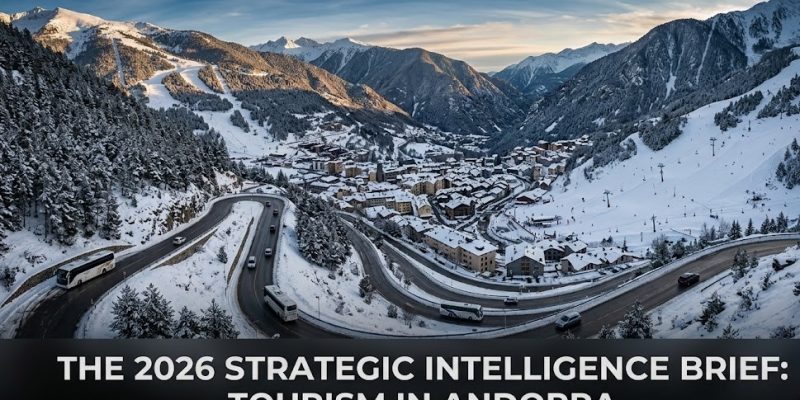
In the global tourism sector of 2026, the Principality of Andorra represents a highly specialized, microeconomic travel hub. Nestled within the Pyrenees mountains between Spain and France, this independent microstate leverages its unique topography and favorable tax structures to drive year-round tourism. This intelligence brief deconstructs the seasonal logistics, economic drivers, and operational mechanics required to deploy a successful travel itinerary to Andorra.

Historical Context and Topographical Architecture
Historically, Andorra’s physical isolation in the Pyrenees kept it disconnected from broader European economic integration. However, following World War II, the principality aggressively developed its infrastructure to capitalize on its high-altitude terrain and status as a tax haven. By 2026, the economy is overwhelmingly reliant on the tourism sector, which accounts for approximately 80% of its GDP. The state has engineered a dual-season architecture: a highly lucrative winter sports economy and a robust summer outdoor recreation economy, ensuring constant capital flow.
Winter Operations: The Ski Economy (December–March)
The logistical core of Andorra’s winter economy centers on its massive, interconnected ski resorts, primarily Grandvalira and Vallnord.
-
Climatic Mechanics: The high-altitude topography guarantees significant snowfall, averaging between 50 cm and 100 cm per month during the peak season. Temperatures routinely drop to 2°C (36°F) and lower, creating optimal conditions for maintaining snowpack.
-
Economic Drivers: January and February are the peak winter revenue months. Beyond direct lift ticket and accommodation sales, the economy is driven by the “Apres-Ski” sector, including the Caldea spa complex in Escaldes-Engordany and the heavy promotion of duty-free winter retail sales.
-
Operational Constraints: Non-skiers may find early winter inhospitable due to sub-zero temperatures and the closure of certain summer-oriented tourist facilities.
Summer Operations: The Alpine Economy (June–September)
To mitigate the economic dip of the off-season, Andorra transitions into a high-altitude adventure hub during the summer.
-
Climatic Mechanics: The summer climate is exceptionally mild, with average peak temperatures reaching only 18°C (64°F) in July. This provides a critical escape from the severe heat waves frequently impacting the lower elevations of southern Europe.
-
Economic Drivers: Revenue is generated through eco-tourism within the Sorteny National Park and the Madriu-Perafita-Claror Valley (a UNESCO World Heritage site). High-margin activities such as guided hiking, mountain biking, canyoning, and river rafting replace ski revenues. Furthermore, the summer retail sales drive significant cross-border shopping traffic.
Logistical Deployment and Microeconomic Factors
Executing a trip to Andorra requires navigating specific logistical realities:
-
Transportation: Andorra is one of the few European nations without an operational airport or train network within its borders. Access requires flying into neighboring hubs (like Barcelona, Spain, or Toulouse, France) and executing a secondary ground transit via car or the well-developed cross-border bus network.
-
Accommodation Economics: The lodging sector is highly tiered, ranging from budget guesthouses starting around €40 per night to luxury ski-in/ski-out chalets.
-
Culinary Synergies: The localized food economy is a blend of Catalan and French influences. Traditional, high-caloric mountain dishes like Escudella (a hearty stew) and Fideuà (a noodle-based paella alternative) average around €15 per person, providing high value relative to Western European standards.

Sociocultural and Behavioral Implications
Behaviorally, Andorra attracts a highly active, consumer-driven demographic. The lack of an airport creates a slight logistical friction that filters out casual, weekend-only tourists, resulting in longer average stay durations. Socioculturally, the local population is heavily geared toward hospitality, operating seamlessly in Catalan, Spanish, and French to accommodate the constant influx of cross-border capital.
Conclusion
The strategic verdict for 2026 is that the optimal time to visit Andorra is entirely dictated by the traveler’s operational objective. For pure winter sports and duty-free ski retail, the deployment window is strictly January through March. For high-altitude hiking, adventure sports, and escaping the European summer heat, the optimal window is July through September. Regardless of the season, travelers must factor in the necessary secondary ground transit required to access this highly optimized, mountain-locked microeconomy.
Also Read :Winter Tourism in Iceland: The 2026 Strategic Intelligence Brief