 By
By 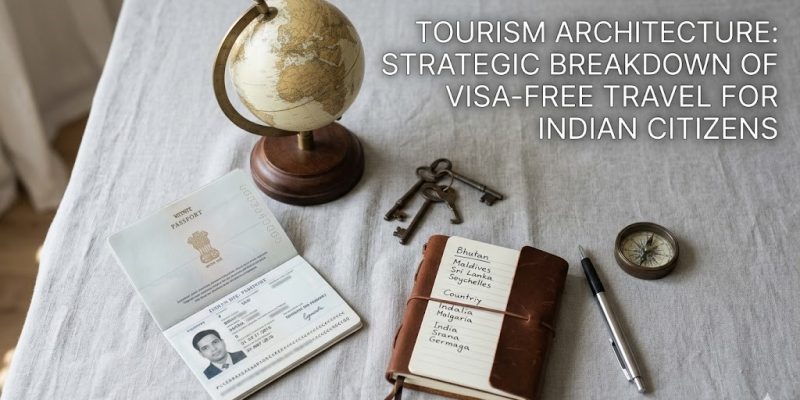
The logistical landscape of international travel for Indian citizens is undergoing a significant structural shift. Moving away from highly bureaucratic, paper-heavy embassy approvals, border control mechanisms are increasingly prioritizing high-velocity tourism. According to the 2026 Henley Passport Index rankings, the Indian passport currently facilitates frictionless entry into 56 global destinations. This intelligence brief deconstructs the mechanics of visa-free, eTA, and Visa-on-Arrival (VoA) frameworks, detailing how travelers can engineer stress-free, spontaneous international itineraries.
Technical Mechanics: Visa Exemptions & Digital Authorizations
Operating a seamless international itinerary requires understanding the precise legal framework governing your entry. “Visa-free” is a blanket term that actually encompasses three distinct border control mechanisms.
-
Pure Visa-Free Entry: This is the ultimate low-friction protocol. Destinations like Nepal, Mauritius, and Kazakhstan allow Indian travelers to arrive and proceed directly to immigration with just a passport (and occasionally proof of a return flight or hotel). This eliminates pre-departure processing, allowing travelers to leverage platforms like EaseMyTrip for spontaneous bookings without lead-time anxiety.
-
Visa on Arrival (VoA): Under this framework, the destination country essentially outsources the visa processing to the arrival terminal. In hubs like Indonesia (Bali) and the Maldives, travelers simply fill out an arrival card, pay a standardized fee (often around USD 30–50), and receive their stamp.
-
Electronic Travel Authorization (eTA): A hybrid approach that digitizes the traditional visa. Destinations like Sri Lanka and Kenya, as well as countries requiring quick pre-registrations like Malaysia’s Digital Arrival Card, utilize automated backend systems to pre-screen travelers within 24 to 72 hours, drastically reducing physical queues at the destination airport.
Strategic Deployment: The Global Nomad Matrix
Selecting the optimal visa-free destination requires aligning your travel objectives—whether budget backpacking, luxury beach isolation, or cultural immersion—with the correct geographic hub.
| Geographic Node | Entry Framework & Duration | Strategic Use Case |
| Nepal | Pure Visa-Free (Unlimited) | Extreme budget efficiency; Himalayan trekking and spiritual retreats. Accessible via direct overland routes. |
| Thailand | Pure Visa-Free (Up to 60 days) | High-energy urban exploration, world-class street food, and island-hopping. Ideal for group tours and first-time international travelers. |
| Bhutan | Entry Permit on Arrival (14 days) | Immersive cultural isolation. Requires adherence to the Bhutan Sustainable Development Fee architecture, filtering for high-value, low-impact tourism. |
| Indonesia (Bali) | Visa on Arrival (30 days) | The ultimate digital nomad and wellness retreat. Balances dense cultural infrastructure with volcanic landscapes and surf culture. |
| Mauritius | Pure Visa-Free (Up to 90 days) | Long-haul luxury beach escapes. Offers a distinct blend of Creole, French, and Indian cultures with high-end resort infrastructure. |
| Fiji | Pure Visa-Free (Up to 120 days) | Remote Pacific isolation and world-class scuba diving. Offers one of the longest visa-free durations available to Indian citizens. |
Structural Vulnerabilities and Strategic Limitations
-
The “Return Ticket” Trap: A critical vulnerability of visa-free travel is the assumption of unconditional entry. Immigration officers in pure visa-free hubs (like Barbados or Jamaica) maintain the authority to deny entry if a traveler cannot produce a confirmed return flight, proof of pre-booked accommodation, and evidence of sufficient financial liquidity for the duration of the stay.
-
Duration Adherence & Overstay Penalties: Visa-free does not equate to residency. Exceeding the stipulated 30, 60, or 90-day window transforms a legal tourist into an undocumented migrant. Overstaying in technologically advanced hubs like Malaysia or Thailand results in immediate blacklisting, severe fines, and detention.
-
Geopolitical Volatility: The list of 56 accessible countries is highly dynamic. Bilateral agreements are frequently recalibrated based on diplomatic relations and domestic security policies. Travelers must verify entry requirements directly with destination embassies just weeks prior to departure, rather than relying on outdated annual lists.
Conclusion
The strategic verdict on the 2026 Indian passport is that it offers highly targeted, strategic mobility. While it currently lacks the blanket access of Western passports, intelligent utilization of VoA and pure visa-free corridors allows Indian citizens to bypass the notorious bottlenecks of Schengen visa processing and US wait times. By matching logistical budgets with the correct regional hubs—from the high-altitude peaks of the Himalayas to the coral reefs of the Indian Ocean—travelers can successfully engineer a frictionless global footprint.
Also Read : Best Time To Visit Kasol in Himachal Pradesh