 By
By 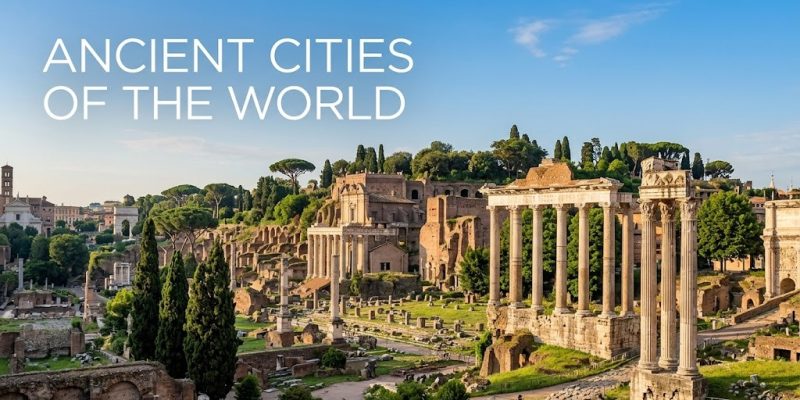
For passionate history buffs and travel enthusiasts, visiting ancient cities in person offers a profound connection to the past that textbooks simply cannot replicate. Across the globe, the monumental ruins of ancient metropolises stand as physical testaments to human ingenuity, architectural mastery, and cultural evolution. Spanning the vibrant trading hubs of the Silk Road to the jungle-shrouded pyramids of Mesoamerica, this comprehensive architectural and historical guide breaks down 10 must-see ancient cities that deserve a permanent spot on your travel bucket list.

1. Samarkand, Uzbekistan
Situated in modern-day Uzbekistan, Samarkand stands as one of the oldest continually inhabited cities in Central Asia. Historically known as the “Crossroads of Cultures,” the city achieved immense wealth and prominence due to its highly strategic position along the lucrative Silk Road trading network.
-
Historical Milestone: While conquered by Alexander the Great and later devastated by Genghis Khan in 1220 AD, Samarkand reached its architectural zenith when the ruler Timur made it the capital of the Timurid Empire.
-
Key Feature: The city is a protected UNESCO World Heritage Site, renowned for its jaw-dropping Islamic architecture, intricate blue-tiled mosaics, and majestic public squares like the Registan.
2. Athens, Greece
As the cradle of Western civilization and the birthplace of democracy, Athens seamlessly intertwines its bustling modern infrastructure with layers of classical antiquity. Serving as the heart of ancient Greece, this venerated city remains a global center for archaeological research.
-
Historical Milestone: During its Golden Age in the 5th century BC, under the leadership of Pericles, Athens became the foremost Mediterranean hub for philosophy, theater, science, and fine arts.
-
Key Feature: The iconic Acropolis citadel dominates the city skyline, housing the Parthenon—a masterpiece of Doric architecture built to honor the goddess Athena.
3. Teotihuacan, Mexico
Located roughly 40 kilometers (25 miles) northeast of modern Mexico City, Teotihuacan is one of the most structurally impressive pre-Columbian metropolises in Mesoamerica. Built by an enigmatic, highly organized civilization, the city’s complex grid layout reflects advanced mathematical and astronomical planning.
-
Historical Milestone: Rising to power between 1 AD and 500 AD, Teotihuacan grew into a massive economic giant with an estimated population exceeding 125,000, making it the largest urban center in the Americas at the time.
-
Key Feature: The sweeping Avenue of the Dead, anchored by the monumental Pyramid of the Sun and the Pyramid of the Moon, showcasing spectacular stone masonry.
4. Machu Picchu, Peru
Perched dramatically on a narrow 2,430-meter (7,970-foot) mountain ridge above the Sacred Valley, Machu Picchu stands as the definitive icon of the Incan Empire. The site is world-famous for its masterfully crafted dry-stone walls, where massive granite blocks were fit together tightly without mortar.
-
Historical Milestone: Constructed around 1420 AD as a royal estate for the Incan emperor Pachacuti, the citadel was inhabited for only a century before being abandoned during the Spanish conquest.
-
Key Feature: The Lost City of the Incas, showcasing brilliant terraced agricultural engineering and panoramic Andean vistas.
5. Timbuktu, Mali
Situated at the southern threshold of the vast Sahara Desert, Timbuktu evolved from a seasonal Iron Age settlement into a fabled medieval center of immense wealth and intellectual enlightenment. The city grew rapidly by controlling the trade of exotic goods, primarily gold, salt, ivory, and manuscripts.
-
Historical Milestone: Absorbed into the wealthy Mali Empire in the early 14th century under Mansa Musa, the city transformed into an international scholarly hub, anchored by the historic Sankore Madrasah university.
-
Key Feature: Distinctive Sudano-Sahelian earthen architecture, best preserved in the wooden-framed clay structure of the Djingareyber Mosque.
6. Rome, Italy
With a rich historical timeline stretching across 28 centuries, the capital city of Italy boasts an unparalleled density of classical ruins. According to legend, the city was founded in 753 BC, evolving from a small riverside settlement into the commanding center of both the Roman Republic and the Roman Empire.
-
Historical Milestone: As the administrative hub of a sprawling empire that encircled the Mediterranean, Rome pioneered massive civil engineering feats, including extensive concrete aqueducts, paved highways, and vaulted domes.
-
Key Feature: The colossal amphitheater of the Colosseum, the pristine architecture of the open-domed Pantheon, and the historic ruins of the Roman Forum.
7. Cairo (Memphis & Giza), Egypt
While modern Cairo is a bustling mega-city, its surrounding landscape serves as the historic gatekeeper to ancient Egypt. Just south of the capital lies the ancient ruins of Memphis, the old kingdom capital known to early pharaohs as Menefer, which functioned as a powerful administrative and religious hub for millennia.
-
Historical Milestone: The consolidation of political power along the Nile Delta enabled early dynasties to organize massive labor forces for monumental state construction projects.
-
Key Feature: The high-density necropolis of Saqqara, home to the Step Pyramid of Djoser, and the adjacent Giza Plateau, which houses the world-famous Great Pyramid of Khufu and the Great Sphinx.
8. Angkor Wat, Cambodia
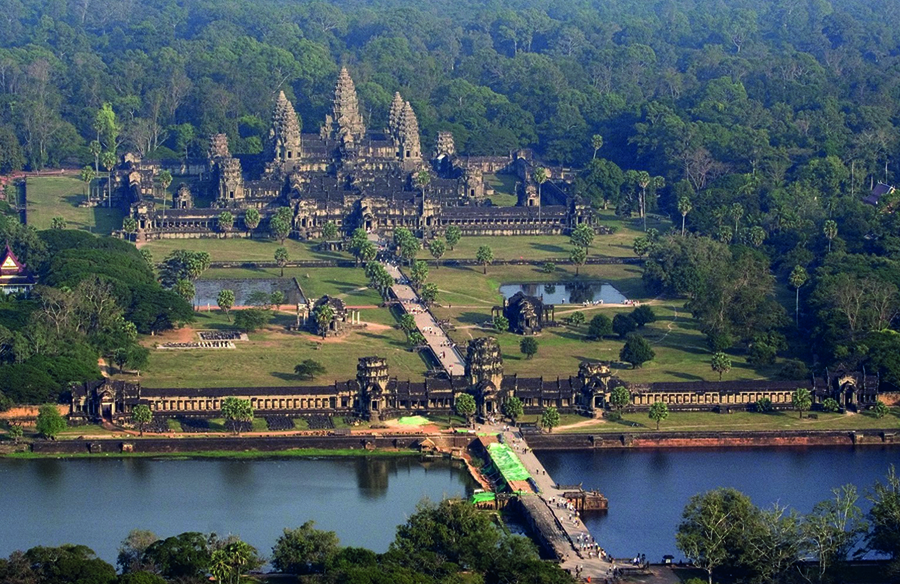
Nestled deep within the northwestern forests of Cambodia, Angkor Wat is the crown jewel of Angkor, the sprawling medieval capital of the Khmer Empire. Originally constructed as a massive Hindu temple dedicated to the god Vishnu, it smoothly transitioned into a sacred Buddhist sanctuary over centuries of continuous use.
-
Historical Milestone: Commissioned by King Suryavarman II in the early 12th century, the complex was engineered to serve as a symbolic, physical representation of Mount Meru, the sacred home of the gods in Hindu cosmology.
-
Key Feature: The world’s largest religious monument, celebrated for its soaring sandstone towers, intricate bas-relief wall carvings, and the enigmatic stone faces of the neighboring Bayon Temple.
9. Tikal, Guatemala
Deep within the dense tropical rainforests of northern Guatemala lie the ruins of Tikal (known anciently as Yax Mutal), one of the largest and most militaristically powerful urban centers of the classic Maya civilization.
-
Historical Milestone: Tikal reached its cultural and political zenith between 200 AD and 900 AD, dominating the Maya region economically before experiencing a sudden societal collapse that left the city completely abandoned to the jungle.
-
Key Feature: Towering, steep limestone temple-pyramids that rise dramatically above the jungle canopy, showcasing the distinct architectural style of the Maya lowlands.
10. Chichen Itza, Mexico
Located on Mexico’s Yucatan Peninsula, Chichen Itza stands as one of the most diverse and exceptionally preserved late-classic Maya metropolises. The city’s unique layout exhibits a fascinating blend of traditional Maya craftsmanship and central Mexican Toltec architectural influences.
-
Historical Milestone: Thriving as a vital regional trade hub from roughly 600 AD into the late medieval period, the city was a center of religious pilgrimage long before the arrival of Spanish conquistadors.
-
Key Feature: The magnificent Temple of Kukulcán (El Castillo), a step-pyramid engineered with precise mathematical accuracy to project a slithering snake shadow during the spring and autumn equinoxes.
Ancient City Global Selection Matrix
This comparative reference matrix organizes the world’s top 10 ancient cities by their geographic region, primary civilization, and standout architectural focus.
| Historical Rank | City & Modern Country | Primary Civilization | Core Architectural Focus | Signature Structural Moat |
| 1 | Samarkand, Uzbekistan | Timurid / Sogdian | Islamic Art & Commerce | Intricate blue-tiled mosaics and the open Registan public square. |
| 2 | Athens, Greece | Classical Greek | Democratic Civic Spaces | Sandstone Doric columns of the Parthenon atop the Acropolis. |
| 3 | Teotihuacan, Mexico | Teotihuacano | Astronomical Urban Design | Massive step-pyramids aligned along the Avenue of the Dead. |
| 4 | Machu Picchu, Peru | Incan | High-Altitude Terracing | Mortarless precision-fit granite blocks on a steep mountain ridge. |
| 5 | Timbuktu, Mali | Mali Empire | Earthen Scholarly Nodes | Wooden-framed clay walls of the historic Djingareyber Mosque. |
| 6 | Rome, Italy | Roman | Imperial Civil Engineering | Monumental concrete vaulting seen in the Colosseum and Pantheon. |
| 7 | Cairo (Memphis), Egypt | Ancient Egyptian | Dynastic Royal Necropolises | Monumental limestone engineering of the Giza Great Pyramids. |
| 8 | Angkor Wat, Cambodia | Khmer Empire | Sacred Temple Cities | Sprawling sandstone spires surrounded by massive defensive moats. |
| 9 | Tikal, Guatemala | Lowland Maya | Rainforest Citadels | Steep limestone temple-pyramids rising above the jungle canopy. |
| 10 | Chichen Itza, Mexico | Maya-Toltec | Advanced Archaeoastronomy | Equinox shadow projections on the Temple of Kukulcán. |
Structural Dynamics of Ancient Exploration
To get the absolute most out of exploring these historic urban centers, keep these practical travel dynamics in mind:
-
Prioritize Early Morning Footwear: Navigating uneven ancient stone roads, unpaved jungle trails, and steep pyramid steps requires thick-soled, supportive footwear. Arriving at the gates during early morning hours also helps you beat intense afternoon heat waves and large tour groups.
-
Respect Local Preservation Boundaries: Many of these fragile ruins face ongoing threats from environmental erosion and heavy foot traffic. Always follow designated pathways, avoid touching delicate stone reliefs, and respect all protective structural barriers put in place by conservators.
-
Hire Certified Archaeological Guides: While self-guided exploration is rewarding, hiring a certified local guide unlocks the deep historical context behind the stones. A trained guide can point out subtle engineering details, decipher ancient glyphs, and share the latest archaeological discoveries.
Conclusion
The definitive historical verdict on compiling an ancient cities bucket list confirms that traveling to these preserved spaces provides irreplaceable insights into human history. Whether you are walking through the towering limestone plazas of Tikal in Guatemala or marveling at the blue-tiled Islamic art of Samarkand, these destinations connect us directly to the shared architectural heritage of our species. By pacing your itinerary to allow for slow, immersive visits and keeping track of localized research updates across dedicated history platforms like Ancient Origins, you can safely and deeply experience the living history left behind by the world’s greatest early civilizations.
Also Read : 10 Most Colourful Cities in the World