 By
By 
Waterfalls represent some of the most dynamic, high-density hydrological systems on Earth. Acting as primary agents of geological change, these natural wonders shape landscapes through continuous headward erosion, river gorge formation, and structural valley carving. From a travel and structural standpoint, evaluating the world’s premier waterfalls requires analyzing a complex matrix of fluid dynamics, sheer vertical drop metrics, and remote geographical access routes.
This professional destination brief explores the top 10 best waterfalls globally, based on over two decades of comprehensive field surveys conducted by the global database World of Waterfalls. By analyzing structural parameters—ranging from the massive 7,000 cubic meters per second volumetric flow of Niagara to the sheer 979-meter vertical leap of Angel Falls—this guide provides a definitive architectural ledger for global wilderness explorers and nature lovers.
Technical Fluid Dynamics and Structural Categorization
To properly evaluate these massive hydrological formations, geomorphologists and travel strategists measure three primary structural variables:
-
Total Vertical Drop ($Height$): The absolute linear distance measured from the upper river lip to the plunge pool basin below. High-drop waterfalls typically rely on dense rock layers—like resistant tepui quartzites—to maintain their vertical profiles over millennia.
-
Volumetric Discharge Rate ($Flow$): The total volume of water traveling over the brink per second, measured in cubic meters per second ($\text{m}^3/\text{s}$) or liters per second. High-volume systems create substantial mist plumes and localized microclimates.
-
Hydrological Block Architecture: Waterfalls are classified based on how their flow makes physical contact with the underlying bedrock. A plunge architecture drops vertically without touching the rock face, a horsetail maintains continuous contact with the underlying slope, and a cascade descends over a series of fragmented stone steps.
The 10 Best Waterfalls in the World: Systemic Review
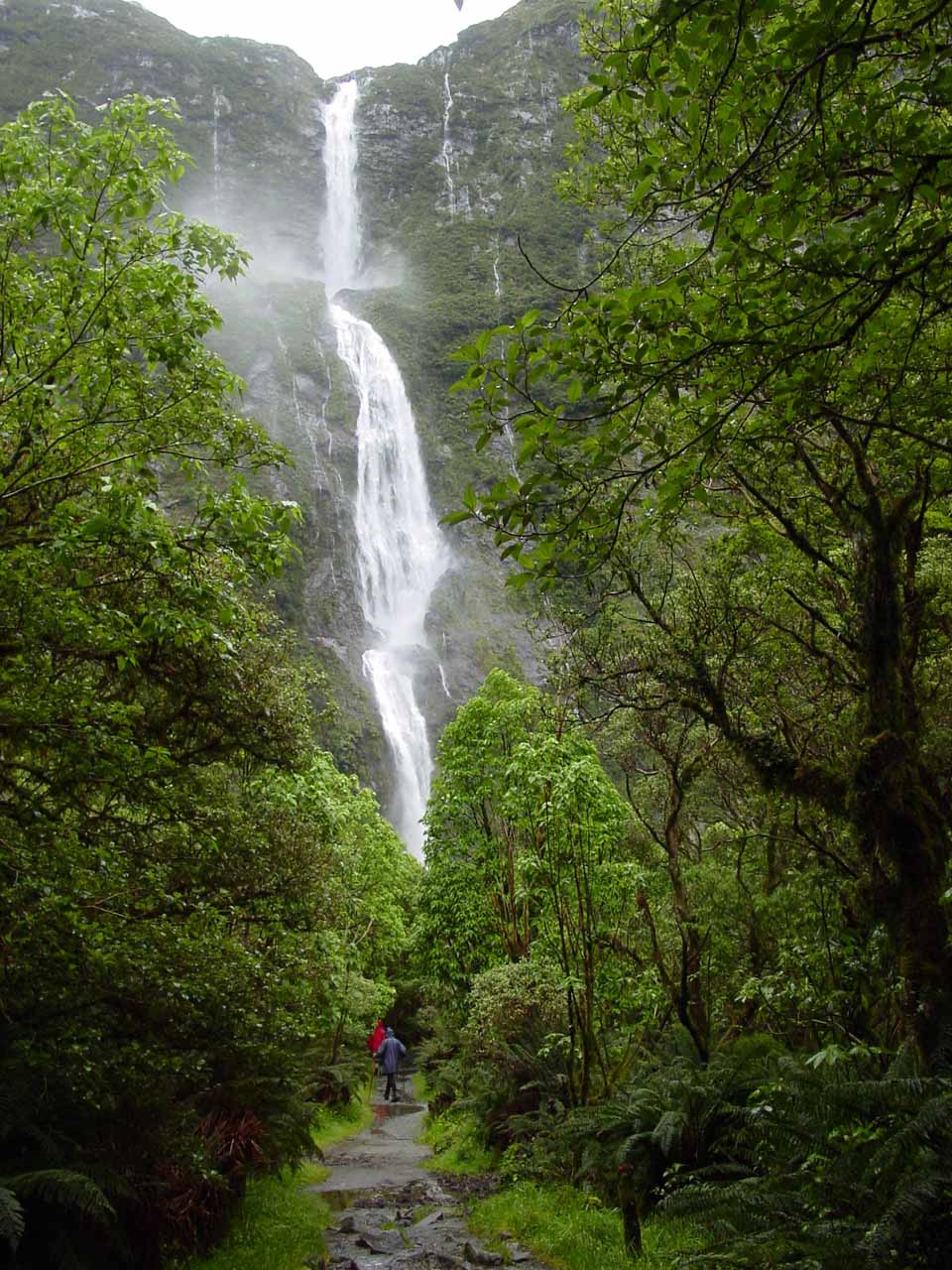
10. Sutherland Falls (Fiordland National Park, New Zealand)
-
Geographic Coordinates: Milford Track, South Island, New Zealand
-
Structural Metrics: 580-meter total drop, feeding out of Lake Quill.
-
Hydrological Profile: Hidden deep within the wild and remote Fiordland National Park—a designated UNESCO World Heritage Area—Sutherland Falls drops dramatically in three distinct, high-velocity tiers. This pristine glacial system requires a dedicated effort to access, sitting as a premier highlight along the Milford Track, widely celebrated as one of the finest walking paths in the world.
-
Travel Highlight: The misty path leading directly to the base pool, where the sheer force of the falling water generates intense localized valley winds.
9. Plitvice Waterfalls (Northern Dalmatia, Croatia)
-
Geographic Coordinates: Plitvice Lakes National Park, Croatia
-
Structural Metrics: A continuous network connecting 16 distinct karst lakes.
-
Hydrological Profile: Departing from traditional singular plunges, Plitvice functions as an intricate, interconnected web of countless waterfalls and mossy cascades. These natural barriers are formed through the continuous deposition of travertine limestone. As the crystal-clear water moves through the lush, protected forest ecosystem, it flows over and around natural moss dams, creating one of the most intimate walking paths on earth.
-
Travel Highlight: Navigating the winding wooden catwalks built directly over the rushing water barriers.
8. Dettifoss (Vatnajökull National Park, Iceland)
-
Geographic Coordinates: Jökulsárgljúfur Canyon, Northeast Iceland
-
Structural Mechanics: 44-meter vertical drop with an expansive 100-meter width.
-
Hydrological Profile: Fed by the massive Vatnajökull glacier, Dettifoss stands as one of Europe’s most powerful and imposing water structures. Pushing unchecked mud-gray glacial meltwater over its volcanic precipice at an average flow of 500 cubic meters per second, the ground literally trembles underfoot. It sits proudly at the head of the Jökulsárgljúfur canyon, carving through the raw Icelandic landscape.
-
Travel Highlight: Standing on the raw western rim, where the lack of guardrails offers an un-sanitized look at nature’s sheer force.
7. Gullfoss (Haukadalur Valley, Iceland)
-
Geographic Coordinates: Hvítá River, Southwest Iceland
-
Structural Mechanics: Two distinct tiers dropping 32 meters at a sharp 90-degree angle.
-
Hydrological Profile: Known as the “Golden Falls,” Gullfoss is a highly unique geological anomaly. The Hvítá River flows down a wide three-step staircase before suddenly plunging into a deep, hidden volcanic crevice. Because the gorge is obscured from a distance, the rushing river appears to vanish directly into the earth, creating a powerful optical illusion that anchors Iceland’s iconic Golden Circle route.
-
Travel Highlight: Viewing the upper canyon rim during a sunny afternoon, when massive rainbows arc perfectly across the roaring mist plume.
6. Yosemite Falls (Yosemite National Park, California, USA)
-
Geographic Coordinates: Yosemite Valley, Sierra Nevada Mountains
-
Structural Mechanics: 2,425-foot (739-meter) total drop across three major sections.
-
Hydrological Profile: Serving as the grand architectural center of Yosemite Valley, this seasonal marvel ranks among the tallest waterfalls on the planet. fed by Sierra Nevada snowmelt, its flow peaks spectacularly in late spring before tapering off in the hot late-summer months. The drop is split cleanly into the Upper Fall (1,430 feet), the Middle Cascades (675 feet), and the Lower Fall (320 feet), offering incredible vistas from countless valley trails.
-
Travel Highlight: Hiking the strenuous Yosemite Falls Trail to stand directly on the dizzying upper brink.
5. Kaieteur Falls (Potaro River, Guyana)
-
Geographic Coordinates: Kaieteur National Park, Amazon Rainforest, Guyana
-
Structural Mechanics: 741-foot (226-meter) sheer, single-drop plunge; 370 feet wide.
-
Hydrological Profile: Perched deep within a pristine, untouched stretch of the Amazonian rainforest atop the ancient Guyana Shield, Kaieteur is one of the world’s most powerful single-drop waterfalls. The Potaro River compresses into a massive, rectangular block of amber water before leaping off a sandstone cliff face. This isolated eco-sanctuary remains highly undisturbed, supporting rare endemic wildlife like the golden rocket frog.
-
Travel Highlight: Approaching the untamed, un-fenced cliff edges via a small charter flight to the isolated jungle airstrip.
4. Angel Falls (Salto Ángel, Canaima, Venezuela)
-
Geographic Coordinates: Auyán-tepui, Canaima National Park, Venezuela
-
Structural Mechanics: 979-meter total drop; 807-meter uninterrupted single plunge.
-
Hydrological Profile: Legally recognized as the tallest permanent waterfall on Earth, Angel Falls drops from the sheer vertical wall of the Auyán-tepui tabletop mountain. Located deep within an equatorial rainforest, its source is completely unique: the fall is fed entirely by heavy clouds drenching the elevated sandstone plateau. Getting to this remote “Lost World” require a true multi-day riverboat expedition, leaving a permanent mark on all who see it.
-
Travel Highlight: Navigating the dense jungle paths via motorized dugout canoe to camp along the Churún River.
3. Niagara Falls (Ontario, Canada / New York, USA)
-
Geographic Coordinates: International Boundary line, Niagara River
-
Structural Mechanics: 51-meter vertical drop; average volumetric flow of 7,000 cubic meters per second.
-
Hydrological Profile: Straddling the border between Canada and the United States, Niagara stands as the most famous and accessible water feature in North America. While its immediate commercial surroundings lean heavily toward urban development, the sheer scale of the falls remains unmatched. Comprising the Horseshoe, American, and Bridal Veil Falls, it handles the massive drainage of the Great Lakes Basin with staggering power.
-
Travel Highlight: Boarding the iconic Maid of the Mist or Hornblower cruise boats to journey directly into the roaring core of the Horseshoe basin.
2. Victoria Falls / Mosi-oa-Tunya (Zambia / Zimbabwe)
-
Geographic Coordinates: Zambezi River, Livingstone, Zambia / Victoria Falls, Zimbabwe
-
Structural Mechanics: 1,700-meter continuous curtain width; 108-meter vertical drop.
-
Hydrological Profile: Known natively as Mosi-oa-Tunya (“The Smoke That Thunders”), this awe-inspiring Natural Wonder of the World forms the largest singular curtain of falling water on the planet. The Zambezi River drops abruptly into a narrow, basaltic volcanic chasm, creating a massive wall of white water. The resulting spray plume rises over 400 meters into the air, visible from miles away and sustaining a lush, local rainforest ecosystem along the canyon rim.
-
Travel Highlight: Booking a low-altitude helicopter charter—known traditionally as the “Flight of Angels”—to fully comprehend the immense scale of the deep basalt gorge.
1. Iguazu Falls (Puerto Iguazú, Argentina / Foz do Iguaçu, Brazil)
-
Geographic Coordinates: Iguazu River border, Argentina (Misiones) / Brazil (Paraná)
-
Structural Mechanics: 2.7-kilometer expansive crescent brink; 275 individual waterfalls and steps.
-
Hydrological Profile: Topping the global database as the ultimate waterfall experience, Iguazu is a breathtaking natural masterpiece. Spanning an incredible 2.7 kilometers through a subtropical rainforest, the river drops across a network of 275 distinct cascades and prime drops. An extensive array of steel catwalks allows visitors to venture deep into the heart of the system, culminating at the edge of the Devil’s Throat (Garganta del Diablo), where the river crashes into a horseshoe canyon with deafening power.
-
Travel Highlight: Walking the long Argentine upper catwalk to stand directly above the plunging precipice of the Devil’s Throat.
Global Hydrological Feature Comparison Matrix
This master reference matrix organizes the world’s top 10 waterfalls by country, primary architectural structure, total vertical drop, and average flow volume to help you plan your next wilderness itinerary.
| Global Rank | Waterfall Property | Country Location | Primary Structural Node | Total Vertical Drop | Average Flow Volume |
| #1 | Iguazu Falls | Argentina / Brazil | Multi-Tiered Crescent Cascade | 82 Meters | $1,000 \text{ m}^3/\text{s}$ |
| #2 | Victoria Falls | Zambia / Zimbabwe | Continuous Fault-Chasm Curtain | 108 Meters | $1,000 \text{ m}^3/\text{s}$ |
| #3 | Niagara Falls | Canada / United States | High-Density Volumetric Plunge | 51 Meters | $7,000 \text{ m}^3/\text{s}$ |
| #4 | Angel Falls | Venezuela | Deep-Jungle Tepui Plunge | 979 Meters | $300 \text{ m}^3/\text{s}$ |
| #5 | Kaieteur Falls | Guyana | Isolated Amazonian Block Plunge | 226 Meters | $660 \text{ m}^3/\text{s}$ |
| #6 | Yosemite Falls | United States (CA) | Seasonal Three-Tiered Plunge | 739 Meters | Variable (Snowmelt) |
| #7 | Gullfoss | Iceland | Double-Tiered Angled Cascade | 32 Meters | $140 \text{ m}^3/\text{s}$ |
| #8 | Dettifoss | Iceland | Glacial Basalt Gorge Plunge | 44 Meters | $500 \text{ m}^3/\text{s}$ |
| #9 | Plitvice Waterfalls | Croatia | Interconnected Travertine Network | 78 Meters (Max) | Variable (Karst System) |
| #10 | Sutherland Falls | New Zealand | Remote Glacial Three-Tier Plunge | 580 Meters | $30 \text{ m}^3/\text{s}$ |
Technical Travel Guidelines for High-Volume Waterfall Expeditions
To ensure a safe, organized, and deeply immersive journey across these powerful wilderness destinations, always keep these foundational guidelines in mind:
-
Deploy Mil-Spec Hardware Protection: High-volume systems like Victoria, Niagara, and Iguazu generate massive, continuous walls of airborne mist that behave like intense rainstorms. Standard water-resistant electronics will quickly fail if exposed to this humid air. Always store your cameras, smartphones, and documents inside dry-bags with a verified IP68 rating, and bring microfiber cloths to clear moisture off your optical lenses between viewing spots.
-
Time Your Journey to Seasonal Flow Cycles: A waterfall’s appearance changes drastically throughout the calendar year. For instance, Yosemite Falls can shrink to a dry stone wall by late August once the winter snowpack melts, while Victoria Falls can become so engulfed in a thick, blinding cloud of spray during the peak flood season (April to May) that seeing the underlying rock structure from the ground becomes almost impossible. Always research regional rainy seasons and melting patterns before booking to ensure you catch your destination at its visual peak.
-
Navigate Catwalk Systems with Care: Developed parks like Plitvice, Iguazu, and Niagara use extensive boardwalk and catwalk systems to take you close to the action. These pathways are subjected to constant mist, making the stone, wood, or metal surfaces incredibly slick. Wear high-traction, water-ready hiking shoes with rubber outsoles, use fixed handrails when moving along exposed platforms, and always follow local trail boundaries to ensure a safe journey.
Conclusion
The definitive geological and travel verdict on the world’s top waterfalls confirms that these magnificent natural landmarks represent the pinnacle of wild landscape beauty. Whether you are tracking the unique double-tier drops of Gullfoss in Iceland or standing over the roaring expanse of Iguazu in South America, these systems stand as moving monuments to the sheer creative power of our planet. By matching your travel plans with specific seasonal water cycles and packing the proper protective gear highlighted across leading outdoor journals like the World of Waterfalls, you can safely journey to the edge of these great wonders to experience the raw, thundering magic of the world’s most powerful currents.
Also Read :Best Tropical Islands in Asia That Feel Like Paradise