 By
By 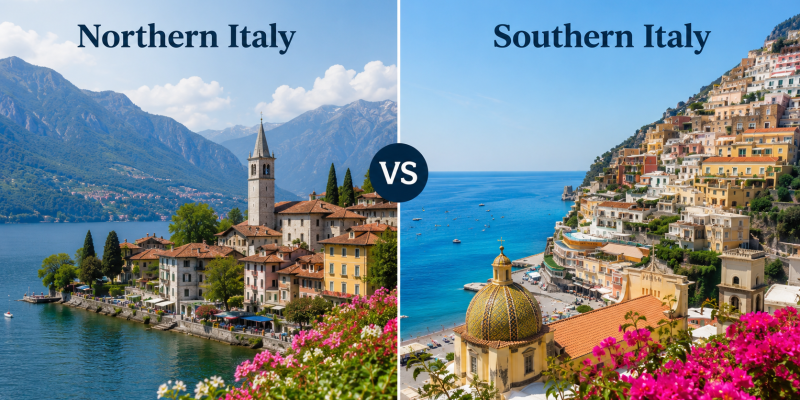
Planning a comprehensive Italian travel itinerary requires a fundamental understanding of the nation’s pronounced regional divergence. Far from being a monolithic cultural landscape, Italy is characterized by a deep geographical, economic, and social division between its northern and southern territories. The Questione Meridionale (the Southern Question)—a historic socio-economic debate tracking the wealth disparity between the industrial North and the agrarian South—continues to shape the everyday pacing, architectural typologies, and lifestyles of both regions.
When organizing an exploration loop through premium networks like Insight Vacations, selecting your point of initialization sets the tone of your journey. This macro-geographical brief deconstructs the structural variance between Northern and Southern Italy, evaluating their respective atmospheric, culinary, and logistical frameworks to help you align your travel objectives with the ideal regional tempo.
Technical Mechanics: The Socio-Spatial Foundations of the Italian Divide
To properly analyze the distinct travel environments of the Italian peninsula, cultural geographers evaluate three specific socio-spatial axes:
-
The Industrial-Agrarian Infrastructure Split: Guided by its historical proximity to central European trade routes, Northern Italy serves as the nation’s primary industrial and financial engine. This economic density manifests in highly structured, high-frequency public transportation networks, sleek contemporary architecture, and a fast-paced cosmopolitan lifestyle. Conversely, Southern Italy’s economy remains deeply rooted in Mediterranean agriculture, maritime trade, and localized, multi-generational fishing networks, cultivating a slower, more tactile, and relationship-driven social environment.
-
The Culinary Lipid Boundary (Butter vs. Olive Oil): The culinary partition of Italy is directly dictated by regional agricultural climates. The cool plains of Emilia-Romagna and Lombardy support extensive cattle farming, positioning butter, heavy creams, Parmigiano-Reggiano, and cured meats like Prosciutto di Parma as the foundational building blocks of Northern cuisine. South of Rome, the intense Mediterranean sun favors durable olive groves and citrus orchards, establishing golden, un-refined olive oil, fresh vine-ripened tomatoes, and wild seafood catch as the un-contested staples of Southern cooking.
-
Patronage and Preservation Styles: The architectural preservation of the North is heavily anchored in the high-density Renaissance and Baroque movements funded by wealthy merchant families like the Medici in Florence. In the South, the landscape features a more rugged, ancient layer of history, preserving remarkably intact Ancient Greek temples in Sicily’s Agrigento, cave-dwelling Sassi structures in Matera, and Arab-Norman cathedrals that reflect centuries of shifting maritime empires.
Regional Profiles and Systemic Highlights
1. The Northern Axis: Cosmopolitan Elegance and Institutional Precision
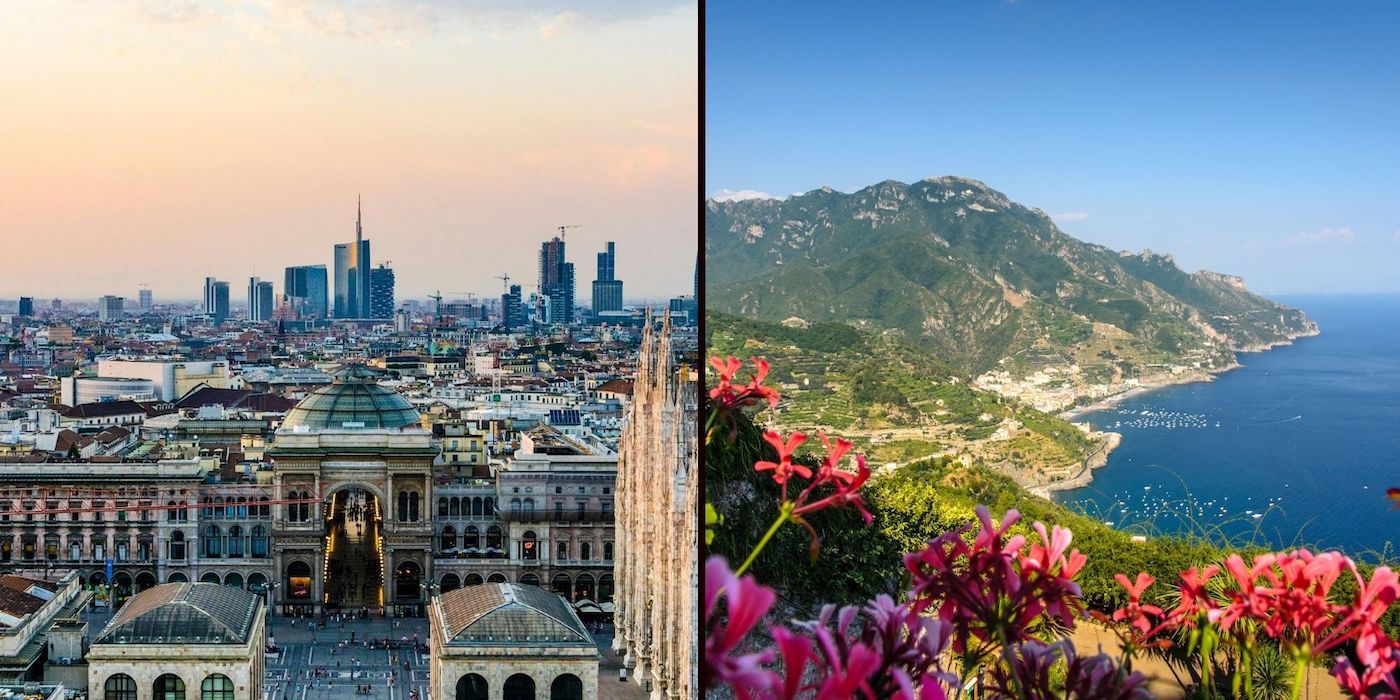
Life in the northern regions moves with deliberate, structured efficiency. The urban corridors of Milan, Turin, and Venice run on synchronized timetables, featuring pristine, sleek trams and high-speed rail lines that link alpine valleys to historic merchant plains. This is the capital of global fashion houses, world-renowned opera houses like Verona’s Roman Arena, and highly managed lakeside sanctuaries where historic villas line the shores of Lake Como and Lake Garda. Travel experiences here lean toward the formal, with pre-booked gallery entries and upscale, sophisticated culinary reservations framing the daily routine.
Culinary Matrix: Rich, heavy, and meticulously balanced. Signature dishes center on slow-cooked saffron risotto, hand-stuffed tortellini in brodo, and complex meat reductions paired with bold Nebbiolo and Sangiovese wines.
2. The Southern Soul: Untethered Simplicity and Maritime Traditions
Crossing into the southern territories initiates an immediate deceleration of time. The prevailing social framework shifts to fare piano (playing softly), an intentional philosophy that values extended meals, late-afternoon closures, and spontaneous human connection over strict schedules. The landscape transitions into sun-bleached cliffside towns hanging over the Amalfi Coast, rolling olive fields in Puglia, and the volcanic intensity of Sicily. Here, open-air markets overflow with oversized, sun-ripened produce, and everyday social life unfurls organically across pastel-colored village squares and rugged coastal harbors.
Culinary Matrix: Bright, raw, and hyper-local. Dishes rely on a splash of extra-virgin olive oil over fresh seafood, hand-rolled orecchiette tossed with bitter broccoli rabe, and creamy, hand-stretched burrata or buffalo mozzarella.
Macro-Regional Comparison Framework
This systematic matrix contrasts the core logistical, atmospheric, and financial metrics that define the travel experience in both major geographic sectors.
| Analytical Vector | Northern Italian Framework | Southern Italian Soul | Central Italian Bridge (Tuscany / Umbria) |
| Logistical Tempo | High precision; packed train lines; time-locked itineraries. | Relaxed pacing; local bus transfers; slow coastal driving. | Balanced mix of scheduled museum runs and open exploration loops. |
| Primary Landscape | Alpine mountain peaks, deep glacial lakes, and dense urban brickwork. | Dramatic sea cliffs, sun-bleached volcanic fields, and citrus groves. | Rolling agricultural hills, terraced vineyards, and hilltop villages. |
| Historical Archive | Renaissance art vaults, Gothic cathedrals, and modern architectural design. | Ancient Greek amphitheaters, Roman ruins, and Arab-Norman architecture. | Etruscan foundations, medieval town squares, and early humanism sites. |
| Financial Overhead | Premium pricing structure; luxury hotel chains; upscale dining tiers. | High-value options; rustic agriturismo farm stays; local street food. | Moderate to premium baseline; boutique vineyard accommodations. |
| Optimal Travel Season | Year-round stability; warm summers; snowy winters optimized for alpine skiing. | Hot, intense summer months; highly optimized during spring and autumn shoulder slots. | Mild mid-year conditions; exceptional color and harvest profiling in October. |
Technical Travel Planning and Routing Protocol
To design a balanced, structurally sound journey that avoids the common pitfalls of over-tourism and physical exhaustion, enforce these baseline planning steps:
Before purchasing regional transit passes, audit your personal travel style. If you require absolute scheduling predictability, synchronized train changes, and air-conditioned multi-pocket luggage routines, book your initial arrival flight into Milan or Venice to leverage the North’s precision transport infrastructure. If you thrive in spontaneous environments and prefer slow coastal drives, route your entry point straight into Naples or Palermo.
If your travel window drops directly into the peak summer axis (July–August), avoid high-density, viral coastal zones like the Cinque Terre or the Amalfi Coast during mid-day intervals. These fragile marine passages become heavily congested under intense heat. Opt instead for high-altitude alpine hiking loops across the Dolomites in the North, or seek out un-crowded, rustic inland agriturismo estates within the heart of Central Tuscany.
To experience both regional extremes without enduring a harsh cultural or logistical shock, anchor the middle phase of your itinerary within Central Italy. Spending a multi-day window exploring the medieval hilltop towns of Umbria and the vineyard valleys of Siena creates an incredibly smooth geographic transition, letting you ease out of the structured elegance of the North and prepare for the untethered, emotional energy of the deep South.
Conclusion
The definitive geographical and cultural verdict on the Italian peninsula confirms that choosing between the North and South is not a matter of identifying a superior destination, but rather matching your immediate travel goals to the appropriate regional frequency. The North delivers an impeccably polished showcase of artistic mastery, architectural harmony, and sophisticated design, serving as an ideal platform for first-time explorers who value structured curation.
Simultaneously, the raw, un-filtered intensity of the South feeds the soul with its slow-cooked traditions, dramatic coastal vistas, and deep-seated community values. By working your routing pathways into a deliberate, evolutionary loop—or utilizing the expert, priority-access orchestration of premium programs like Insight Vacations—you can unlock both distinct dimensions of Italy’s ancestral identity, ensuring your journey across the Mediterranean’s most celebrated peninsula remains deeply rewarding from end to end.
Also Read :Most Beautiful Castle Destinations in Europe for a Fairytale Vacation