 By
By 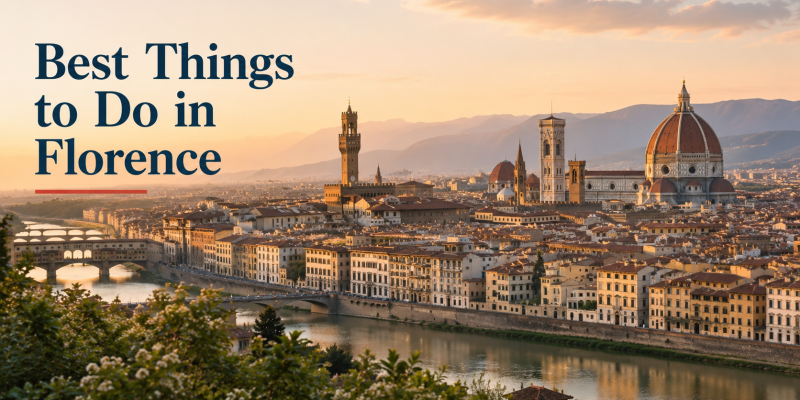
Florence, the geographic and intellectual heart of Italy’s Tuscany region, functions as a living archive of the Renaissance. The city skyline is defined by masonry vaulting, geometric stone facades, and urban planning loops that date back to the 14th century. For any traveler, exploring Florence means tracing the shift from heavy medieval defensive structures to the balanced, mathematical precision of early modern humanism.
When curated alongside priority-access itineraries like Insight Vacations, these monuments transform from passive museum exhibits into active narratives of design, political patronage, and engineering breakthroughs. This comprehensive brief deconstructs the 17 essential landmarks and cultural practices defining the Tuscan capital.
Technical Mechanics: The Structural and Spatial Dynamics of the Renaissance
To properly decode Florence’s built environment, architectural historians track three foundational design breakthroughs:
-
Scaffolding-Free Masonry Vaulting: Prior to the 15th century, constructing massive wide-span stone domes required extensive timber scaffolding frameworks to hold the bricks in place until the central keystone was dropped. Filippo Brunelleschi upended this limitation at the Cathedral of Santa Maria del Fiore by deploying a self-supporting herringbone brick layout that distributed load forces inward and downward simultaneously.
-
The Medici Urban Patrol Moat: Architectural design under the ruling Medici family served as a direct physical expression of political power. The construction of heavy, fortress-like palaces—such as the Palazzo Vecchio—featured thick, rough-hewn stone layers (rustication) on the lower levels for defense, transitioning to smooth, refined masonry on upper tiers to project sophisticated civic authority.
-
The Oltrarno Artisan Ecosystem: The spatial segregation of trades across Florence dates back to medieval guild mandates. While the political and spiritual complexes dominated the north bank of the Arno River, specialized production units—such as leather tanning, goldsmithing, and marbleizing—were isolated in the Oltrarno (south bank) district, maintaining an uninterrupted line of handmade craft production that survives into the 21st century.
1. The Uffizi Gallery
-
Architectural Signature: Mannerist Civic Architecture
-
Engineering Core: Commissioned by Grand Duke Cosimo I de’ Medici in 1560, this sprawling horseshoe-shaped complex was originally engineered by Giorgio Vasari to centralize the uffizi (administrative and judicial offices) of the Florentine state. Today, it stands as one of the world’s premier art repositories, safeguarding masterworks like Botticelli’s The Birth of Venus and Leonardo da Vinci’s Annunciation. Architecturally, the building uses long, continuous loggias and specialized structural piers to seamlessly link the political hub of the Piazza della Signoria with the banks of the Arno River.
2. Mercato Centrale
-
Architectural Signature: 19th-Century Cast-Iron Industrialism
-
Engineering Core: Designed by Giuseppe Mengoni and opened in 1874 during the Risanamento era, this central food hub features a heavy stone base paired with a lightweight, soaring upper skeleton of cast-iron pillars and expansive glass panes. The ground floor functions as an active market matrix where multi-generational vendors slice local cheeses, portion Tuscan meats, and sell fresh produce. Upstairs, a modern food court serves authentic culinary preparations like ribollita (a hearty, slow-simmered bread and vegetable stew) and thick cuts of Florentine steak.
3. The Streets of San Lorenzo
-
Architectural Signature: Early Renaissance Urban Fabric
-
Engineering Core: The San Lorenzo district is anchored by the Basilica di San Lorenzo, designed in the 15th century by Filippo Brunelleschi to showcase strict geometric proportion and clean linear perspective. Adjacent to the church sit the magnificent Medici Chapels, an opulent, marble-clad mausoleum featuring tomb sculptures carved by Michelangelo. Outside these historic walls, the streets transform into an active leather market, carrying forward a traditional artisan craft that has defined Florentine manufacturing since the ancient Etruscan era.
4. The Ponte Vecchio
-
Architectural Signature: Medieval Segmented Arch Bridge
-
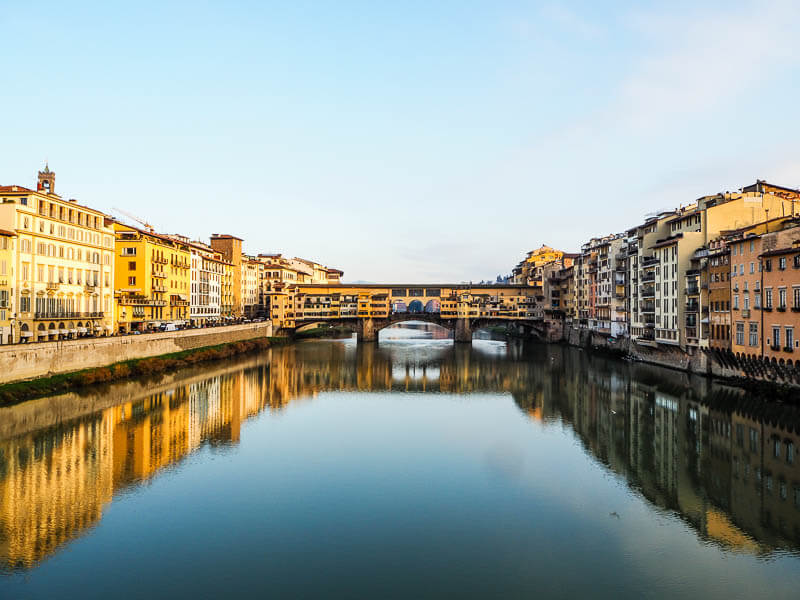
Engineering Core: Spanning the narrowest point of the Arno River, this 14th-century stone bridge is renowned for its three wide, segmented arches that allow river debris to pass safely beneath during heavy mountain floods. It holds historical significance as the only bridge in Florence spared from destruction by retreating forces during World War II. Originally occupied by butchers and tanners, the built-in overhead shops were restricted to jewelers and goldsmiths in 1593 by decree of Ferdinand I to eliminate foul odors beneath the private Vasari Corridor running above the shops.
5. The Accademia Gallery
-
Architectural Signature: Enclosed Neoclassical Exhibition Hall
-
Engineering Core: Established in 1784 as an instructional academy for fine arts students, this museum draws global audiences to witness Michelangelo’s original David sculpture up close. The statue sits beneath a specialized, vaulted neoclassical tribune designed specifically to focus natural ambient light onto the 17-foot marble form, highlighting the anatomical precision and tension of the musculature. Traveling with premium curation programs like Insight Vacations allows visitors to bypass the massive exterior standby queues to access the gallery smoothly.
6. Piazza della Signoria
-
Architectural Signature: Medieval Civic Forum
-
Engineering Core: Serving as the political focal point of Florence since the 14th century, this grand L-shaped public square acts as an open-air sculpture museum. The space is anchored by the Loggia dei Lanzi, a wide-arched covered gallery housing powerful Renaissance statues like Cellini’s Perseus with the Head of Medusa. A high-fidelity replica of Michelangelo’s David stands guard outside the main palace doors, marking the historic boundary where public assemblies and state executions unfolded across Florentine history.
7. The Duomo Complex
-
Architectural Signature: Italian Gothic / Romanesque Inlay
-
Engineering Core: This monumental religious footprint features the Cathedral of Santa Maria del Fiore, Giotto’s Campanile, and the octagonal Baptistery of San Giovanni. The Baptistery features the famous Gates of Paradise—gilded bronze doors designed by Lorenzo Ghiberti over a 27-year period following a historic 1401 civic competition. The entire complex is wrapped in an intricate exterior cladding of green, white, and red marble panels, establishing a distinct color palette that dominates the urban center.
8. Brunelleschi’s Dome
-
Architectural Signature: Double-Skinned Octagonal Vault
-
Engineering Core: Crowning the main cathedral cathedral, this structural masterpiece stretches 148 feet (45 meters) wide without the support of external Gothic flying buttresses. Brunelleschi engineered an interlocking, two-layer brick shell tied together by hidden stone rings and a continuous herringbone brick pattern that stops the masonry from collapsing inward during construction. Visitors who scale the steep 468 internal steps navigate the narrow corridor between the inner and outer dome shells, gaining a direct view of the engineering mechanics that redefined Western architecture.
9. The Pitti Palace and Boboli Gardens
-
Architectural Signature: High-Medici Palatial Mannerism
-
Engineering Core: Initially built for a wealthy banker in the 15th century and later purchased by the Medici family as their primary royal residence, this massive stone palace features rugged rusticated stone blocks. Directly behind the palace structure sits the Boboli Gardens, an expansive, multi-tiered green space that established the classic layout for formal Italian gardens. The landscape uses formal axial pathways, hidden grottoes, monumental fountains, and classical statues to convert a steep hillside into a highly styled outdoor theater.
10. Piazzale Michelangelo
-
Architectural Signature: 19th-Century Neoclassical Overlook
-
Engineering Core: Positioned on a high hill on the south bank of the Arno River, this expansive terrace was engineered in 1869 by Giuseppe Poggi during Florence’s brief tenure as the capital of the Kingdom of Italy. The platform features bronze replicas of Michelangelo’s sculptures and delivers a sweeping, unobstructed view of the entire historic center. The overlook is optimized at sunset, when the low-angle light bathes the red-tiled roof of the Duomo and the arches of the Ponte Vecchio in a warm golden glow.
11. Santa Maria Novella
-
Architectural Signature: Gothic Core / Renaissance Facade
-
Engineering Core: Founded by the Dominican Order in the 13th century, this religious complex is celebrated for its striking green-and-white marble facade completed by Leon Battista Alberti in 1470. Alberti used precise mathematical ratios and classical scrolls to harmonize the irregular Gothic structures below with a balanced Renaissance upper framework. Inside, the nave holds highly important perspective-driven frescoes, including Masaccio’s Trinità, which pioneered the use of a single mathematical vanishing point in Western painting.
12. Basilica di Santa Croce
-
Architectural Signature: Franciscan Gothic Architecture
-
Engineering Core: Holding the distinction of being the largest Franciscan church on Earth, Santa Croce features a wide, open timber-roofed nave designed to project acoustic clarity for public preaching. Known colloquially as the “Temple of Italian Glories,” the basilica functions as a national mausoleum, holding the elaborate tombs and monumental monuments of Italy’s most influential historical minds, including Michelangelo, Galileo Galilei, Niccolò Machiavelli, and Gioachino Rossini.
13. Palazzo Vecchio
-
Architectural Signature: Medieval Fortified Civil Palace
-
Engineering Core: Built at the turn of the 14th century to house the ruling council of the republic, this imposing fortress features solid rusticated brickwork and a dramatic, asymmetric bell tower rising 311 feet (95 meters) high. The tower was strategically engineered to offer long-range visibility over the Arno valley to scan for approaching threats. Inside, the massive Salone dei Cinquecento (Hall of the Five Hundred) features giant wall frescoes and complex paneled ceilings engineered by Giorgio Vasari to accommodate large legislative assemblies.
14. The Oltrarno District
-
Architectural Signature: Living Artisan Urban Quarter
-
Engineering Core: Located on the south bank of the Arno River, the Oltrarno neighborhood preserves the traditional studio layout of medieval Florence. The narrow streets are packed with active workshops where preservationists hand-tool raw leather, restore antique oil paintings, and practice traditional wood-carving techniques away from high-traffic commercial loops. The district centers on the Piazza Santo Spirito, a lively community square fronting Filippo Brunelleschi’s understated, organically curved Basilica di Santo Spirito.
15. Museo Galileo
-
Architectural Signature: Renaissance Institutional Archive
-
Engineering Core: Situated in the 11th-century Palazzo Castellani, this specialized museum catalogs the history of science and mechanics. The galleries house the original instruments and scientific tools developed by Galileo Galilei, including the two original telescopes he built to discover the moons of Jupiter in 1610. The collection also displays an extensive archive of early globes, astrolabes, and mathematical instruments collected by the Medici and Lorraine dynasties, charting the evolution of navigation and optics.
16. The Arno River Promenades
-
Architectural Signature: Linear Riparian Infrastructure
-
Engineering Core: The Arno River functions as the central geographic axis of Florence, historically serving as a critical commercial shipping channel and a source of water for the city’s wool and textile guilds. Strolling along the continuous stone embankments (Lungarni) offers expansive views of the city’s historic bridges. These linear pathways provide a relaxed, open space to escape dense interior street crowds, especially at dusk when the building facades along the water cast long reflections onto the river surface.
17. The Tuscan Countryside
-
Architectural Signature: Agrarian Terraced Landscape Architecture
-
Engineering Core: Directly outside Florence’s medieval city walls sits the rolling terrain of the Tuscan countryside, shaped by centuries of structured agricultural engineering. The hills are sculpted into terraces optimized for cultivating vineyards and olive groves across world-class wine zones like Chianti. Taking a day excursion from the urban core allows travelers to analyze the architectural layouts of medieval walled hill towns like San Gimignano and Siena, or explore the engineering of the Leaning Tower of Pisa, making it easy to sample the broader geography of Central Italy.
Historical Era and Structural Orientation Matrix
This master reference guide organizes Florence’s 17 essential landmarks by primary building era, urban location zone, and core engineering focus to help you organize your upcoming exploration routes.
| Landmark Name | Urban Location Zone | Primary Building Era | Core Engineering Focus | Primary Material Base |
| The Uffizi Gallery | Centro Storico (North) | Mannerist (16th c.) | Civic Corridor Integration | Pietra Serena & Stucco |
| Mercato Centrale | San Lorenzo District | Industrial (19th c.) | Cast-Iron Glass Vaulting | Iron Framework & Stone |
| San Lorenzo Streets | Centro Storico (North) | Early Renaissance | Geometric Ratios / Markets | Tuscan Leather & Marble |
| The Ponte Vecchio | Arno River Crossing | Medieval (1345) | Segmented Arch Hydraulics | Carved Stone Masonry |
| The Accademia Gallery | San Marco District | Neoclassical (18th c.) | Focused Natural Lighting | Glazed Drywall & Marble |
| Piazza della Signoria | Centro Storico (North) | Medieval (14th c.) | Open-Air Public Gathering | Pietra Forte Paving Blocks |
| The Duomo Complex | Piazza del Duomo | Italian Gothic Core | Gilded Bronze Casting | Inlaid Polychrome Marble |
| Brunelleschi’s Dome | Piazza del Duomo | High Renaissance (1436) | Herringbone Structural Shell | Red Structural Brickwork |
| Pitti Palace & Gardens | Oltrarno District (South) | Mannerist Landscape | Terraced Hillside Hydraulics | Heavy Rusticated Ashlar |
| Piazzale Michelangelo | San Niccolò (South Hill) | Risanamento Era (1869) | Strategic Panoramic Vista | Reinforced Earth & Bronze |
| Santa Maria Novella | Rail Station District | Gothic / Renaissance | Proportion Facade Tuning | Green & White Marble |
| Santa Croce Basilica | Santa Croce District | Franciscan Gothic | Open Timber Acoustic Roof | Exposed Brick & Limestone |
| Palazzo Vecchio | Piazza della Signoria | Medieval (1299–1314) | Long-Range Watchtower Flight | Solid Pietra Forte Stone |
| Oltrarno Artisan Zone | South Bank Quarters | Medieval Guild Roots | Studio Workshop Clusters | Exposed Timber & Mortar |
| Museo Galileo | River Bank District | Renaissance Core Archive | Precision Optical Tracking | Archive Glass & Hardwood |
| Arno River Promenades | Fluvial Corridors | Medieval Flood Defenses | Reinforced Stone Wharves | Structural Stone Blocks |
| Tuscan Countryside | Regional Outskirts | Agrarian Terraced | Hillside Soil Stabilization | Olive Groves & Grape Vines |
Essential Travel Security and Preservation Guidelines
To safeguard your travel schedule and protect Florence’s delicate historical sites from human moisture and physical wear, follow these foundational guidelines:
-
Secure Advanced Museum Credentials: Due to strict daily capacity caps designed to control indoor humidity levels and protect fragile Renaissance oil pigments, entry slots at the Uffizi and Accademia galleries fill completely weeks in advance. Enrolling in premium, priority-access travel itineraries like Insight Vacations is highly recommended to guarantee your entry times and bypass massive exterior ticket lines.
-
Prepare for Steep, Narrow Ascents: Climbing Brunelleschi’s Dome or Giotto’s Campanile requires navigating tight, historic brick stairwells without modern elevator access. These enclosed spaces can become warm and cramped during mid-day periods. Wear broken-in, high-traction footwear, carry adequate water, and pace your ascent to match the steady flow of the climbing route.
-
Verify Regional Train and Tour Connections: When coordinating day trips into the broader Tuscan countryside—such as traveling to the medieval walls of Siena or the wine cellars of Chianti—always validate your regional train and bus connection schedules ahead of time. Utilizing structured group transport or pre-vetted private shuttles ensures clean execution, saving you from missing tight connection windows at the central Santa Maria Novella rail hub.
Conclusion
The definitive architectural and structural assessment of Florence confirms that the city stands as a supreme physical testament to human ingenuity. From the self-supporting brickwork of Brunelleschi’s dome to the preservation of centuries-old artisan traditions in the Oltrarno district, Florence’s monuments are far more than beautiful backdrops; they are enduring records of a movement that fundamentally reshaped Western civilization. By matching your exploration routes with clear historical timelines and leaning on the priority-access curation of elite travel programs, you can step safely into the heart of this living museum to experience the timeless majesty of Italy’s past.
Also Read :Most Beautiful Castle Destinations in Europe for a Fairytale Vacation