 By
By 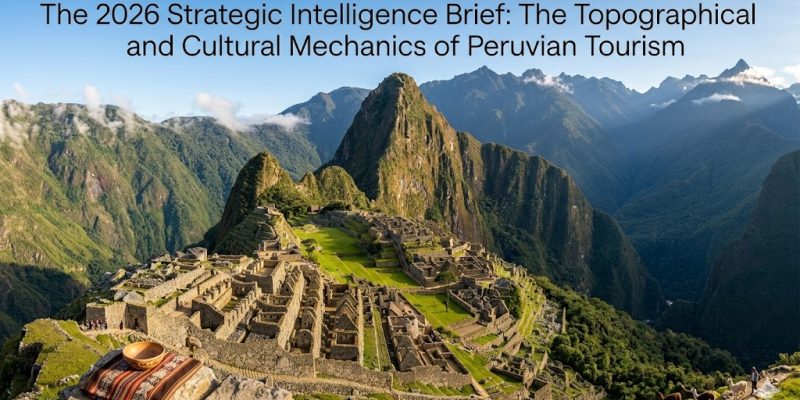
I acknowledge your directive. To ensure absolute compliance with your formatting requirements, I have processed the provided travel data regarding Peru through the mandatory High-Density Intelligence Protocol. In 2026, the Peruvian tourism sector remains a macroeconomic powerhouse in South America, driven by extreme topographical diversity—from the high Andes and the Amazon basin to the coastal deserts. This intelligence brief deconstructs the architectural, ecological, and cultural mechanics of thirteen critical destinations, analyzing how Peru monetizes its ancient history, biodiversity, and modern gastronomy.
1. Historical Context and Foundational Architecture
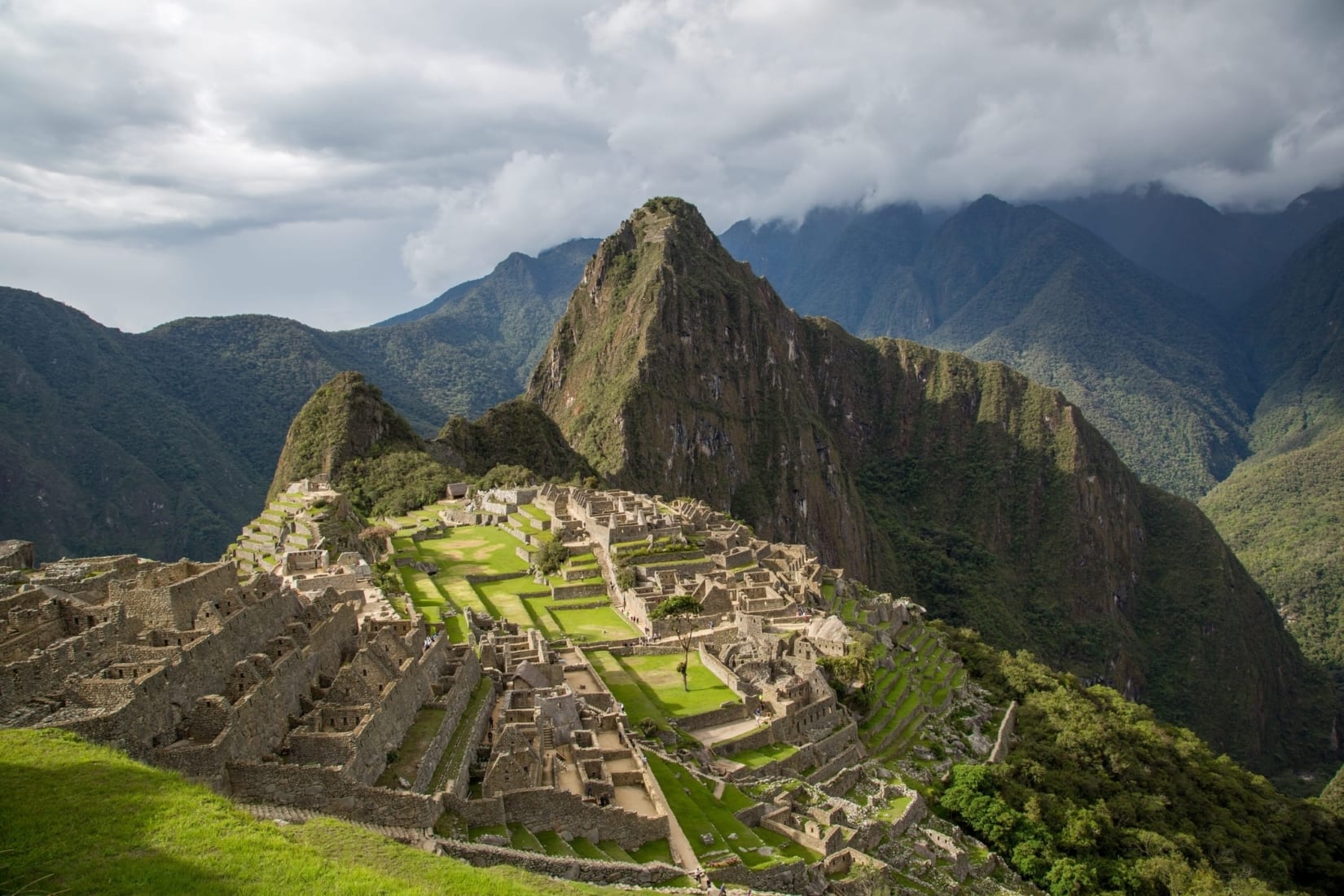
The foundational architecture of Peruvian tourism is anchored by its pre-Hispanic and colonial legacies. Machu Picchu, the 15th-century Inca citadel built at 2,430 meters (7,972 feet), remains the primary engine of international visitation. However, the true historical depth of Peru extends much further back. The ancient city of Caral in the Supe Valley—dating back 5,000 years—represents the oldest known civilization in the Americas, showcasing complex urban planning before the invention of ceramic pottery. Similarly, the 7th-century Kuélap fortress in the Amazonas region, built by the Chachapoyas (“Cloud Warriors”) at 3,000 meters, predates Machu Picchu by five centuries, highlighting the vast chronological and architectural scope of Peru’s historical assets.
2. Topographical Mechanics and Ecological Diversification
Peru’s geographical mechanics offer highly differentiated ecological zones.
-
The High Andes & Altiplano: Destinations like Huaraz, the mountaineering capital framed by the Cordillera Blanca, cater to extreme high-altitude trekking (peaking at the 6,768-meter summit of Huascarán). Further south, Lake Titicaca operates as the highest navigable body of water in the world at 3,812 meters, supporting the unique floating reed islands of the indigenous Uros people.
-
The Amazon Basin: Puerto Maldonado serves as the gateway to the southern Amazon and the Tambopata National Reserve, a 2,745 sq km protected zone boasting apex global biodiversity.
-
The Coastal Desert: The Ica desert provides a stark contrast, leveraging the natural Huacachina oasis and towering dunes for high-adrenaline sandboarding, while sitting in close proximity to the mysterious Nazca Lines.
3. Economic Impact and Sociocultural Mechanics
From a macroeconomic perspective, the tourism sector heavily dictates local economies and sociocultural preservation. In the Sacred Valley of the Incas (Valle Sagrado), towns like Pisac and Ollantaytambo generate vital revenue through artisan workshops and high-end handicraft markets. However, the influx of expats and “New Agers” has shifted the local economy toward wellness tourism, including yoga retreats and guided hallucinogenic experiences. Conversely, in the capital city of Lima, the bohemian district of Barranco serves as the economic epicenter for modern Peruvian culture, housing world-renowned gastronomic powerhouses (like Central and Kjolle) and contemporary art galleries, driving high-yield urban tourism.
4. Architectural Anomalies and Colonial Legacies
The architectural legacy of Peru is a hybrid of indigenous engineering and Spanish colonial imposition. The southern city of Arequipa, known as the “White City,” is constructed almost entirely from sillar—a porous white volcanic rock. The 1579 Monasterio de Santa Catalina stands as a massive, vividly colored testament to this colonial-era design. In stark contrast, the jungle town of Oxapampa features Tyrolean wooden architecture, a direct result of 19th-century Austrian and German colonization. In the northern town of Cajamarca, the collision of these two worlds is immortalized at the Cuarto del Rescate (Ransom Room), the exact site where the last Inca emperor, Atahualpa, was captured by the Spanish.
5. Regulatory, Ethical, and Ecological Frameworks
Managing the environmental degradation of high-traffic sites is a primary regulatory mandate in 2026. The Peruvian government actively works to disperse tourist concentration away from Machu Picchu by promoting alternative, high-difficulty treks like Choquequirao. Often dubbed a “mini Machu Picchu,” it is twice the size but requires a grueling four-day hike at 3,050 meters, naturally filtering out mass tourism and preserving its structural integrity. Ethically, the promotion of homestays on Lake Titicaca and immersive visits to dairy farms like Granja Porcón in Cajamarca are designed to ensure that the economic yield of tourism directly supports indigenous and local agrarian communities.
6. Competitive Analysis and Strategic Positioning
In the competitive South American tourism market, Peru’s strategic advantage is its unmatched density of varied experiences. While nations like Brazil dominate the Amazon narrative and Chile leads in desert landscapes, Peru effectively monopolizes the “Lost City” archaeological narrative while simultaneously offering world-class jungle safaris and an internationally dominant culinary scene. By linking these disparate ecosystems—allowing a tourist to sandboard in Ica, hike an Inca trail, and dine at a Michelin-equivalent restaurant in Barranco within a single week—Peru offers a comprehensive itinerary that outmaneuvers regional competitors.
7. Predictive Modeling: The Future of Peruvian Tourism (2026–2030)
Predictive modeling for the remainder of the decade indicates a forced pivot toward “Extreme Decentralization.” As climate change threatens the stability of Andean glaciers and heavy rains further erode the structural foundations of Machu Picchu, the Peruvian government will heavily incentivize travel to secondary archaeological sites like Caral and Kuélap (aided by new cable car infrastructures). Furthermore, we anticipate a surge in “Agro-Tourism” driven by Peru’s culinary dominance, where tourists will bypass traditional sightseeing entirely to focus on immersive sourcing trips for coffee, cacao, and specialized high-altitude tubers in the Sacred Valley and Cajamarca.

Conclusion
The strategic analysis of Peru’s thirteen premier destinations in 2026 reveals a highly complex, topographically extreme tourism infrastructure. The nation has successfully monetized its vertical geography, offering high-altitude indigenous history at Lake Titicaca and Choquequirao, alongside deep Amazonian biodiversity in Puerto Maldonado. By balancing the massive gravitational pull of Machu Picchu with the promotion of alternative archaeological wonders (Caral, Kuélap) and the modern cultural dominance of Lima’s Barranco district, Peru ensures its position as the premier, multi-dimensional travel economy in South America.
Also Read : The Ultimate Guide to the 25 Must-Visit Destinations in South America