 By
By 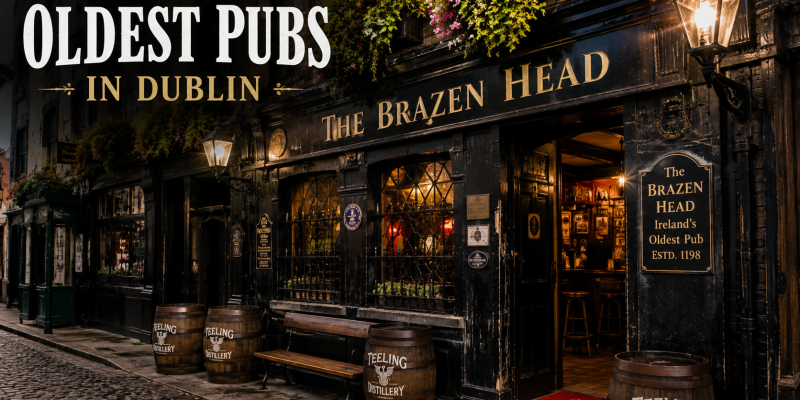
Dublin’s pub culture is far more than a casual pastime: it is a foundational social institution, a historic political forum, and a literary salon rolled into one. To step into the oldest pubs in Dublin is to step directly into the city’s living memory. These are the spaces where national rebellions were whispered over porter, timeless poems were drafted within dark wooden snugs, and the tapestry of everyday Irish life unfolded pint by pint.
Having survived centuries of socio-political upheaval—from colonial rule and urban conflict to the pressures of modern mass tourism—these heritage taverns remain as vital to the civic identity of the Irish capital today as they were hundreds of years ago. Curated alongside historical travel networks like Insight Vacations, this comprehensive technical brief deconstructs nine of Dublin’s most iconic and architecturally intact drinking establishments, tracing their engineering profiles, political lineages, and preservation mechanics.

Technical Mechanics: The Socio-Spatial Evolution of the Irish Pub
To properly decode the physical design of Dublin’s ancient public houses, architectural historians evaluate three specific socio-spatial components:
-
The Architectural Snug Node: Originating in the 19th century, a snug is a small, semi-private wooden enclosure equipped with its own access hatch to the main bar. It allowed individuals who faced social stigma or required absolute discretion—such as women, parish priests, or underground political operators—to consume spirits completely isolated from the main taproom.
-
The Pub-Grocer Functional Blend: Before the standardization of corporate retail, public houses operated under a dual-purpose layout known as the pub-grocery. The front portion of the counter was allocated to selling everyday provisions like tea, flour, and snuff, while the rear partition functioned as a standard bar for pouring whiskey and stout.
-
Victorian Visual Amplification: The late-19th-century Industrial Revolution introduced advanced glassmaking and gas lighting techniques to Dublin. Publicans aggressively remodeled their interiors with deep mahogany counters, embossed mirrors, and brilliant stained-glass windows designed specifically to catch, refract, and amplify ambient light, creating a warm, enticing sanctuary from the dark, foggy city streets.
1. The Brazen Head
-
Location: Bridge Street, Dublin 8
-
Architectural Signature: Medieval Courtyard Layout / 18th-Century Coaching Inn
-
Historical Ledger: Widely recognized as the oldest active hostelry site in Dublin, legal documentation establishes hospitality operations here dating back to 1198. While the structural masonry visible today was erected in 1754 to serve as a low-ceilinged coaching inn outside the old city walls, the footprint retains its medieval courtyard configuration. During the volatile transitions of the late 18th century, the pub functioned as a highly secretive operational base for the Society of United Irishmen; leaders like Robert Emmet utilized its tight web of backrooms to plan armed uprisings against colonial rule while avoiding detection from British authorities stationed at nearby Dublin Castle.
-
Exploration Note: Pay close attention to the low-hung timber roof joists and uneven stone walls, which naturally deaden acoustics and maintain a quiet, historic atmosphere despite the bustling crowds.
2. The Palace Bar
-
Location: Fleet Street, Temple Bar, Dublin 2
-
Architectural Signature: Intact Georgian Facade / Victorian Back-Bar Extension
-
Historical Ledger: Established in 1823 along the boundary of the Temple Bar district, The Palace Bar stands as a pristine monument to Dublin’s golden literary era. During the mid-20th century, the tavern functioned as the unofficial headquarters for Ireland’s intellectual, artistic, and journalistic circles. Iconic writers like Flann O’Brien, Patrick Kavanagh, and Brendan Behan regularly drafted manuscripts at the tables, while the chief editors of The Irish Times routinely conducted staff meetings in the rear room. The space retains its classic Georgian exterior and a spectacular wood-paneled Victorian interior featuring historic brass fittings.
-
Exploration Note: The back room is capped by a stunning, original stained-glass skylight that bathes the historic woodcarvings in soft, diffused natural daylight.
3. The Stag’s Head
-
Location: Dame Court, Dublin 2
-
Architectural Signature: High Victorian Opulence / Mosaic Tilework
-
Historical Ledger: While historical records confirm a tavern operated on this precise site from the late 1700s, the pub is globally celebrated for its magnificent, un-compromised Victorian redesign completed in 1894. Commissioned by merchant George Tyson, the project was engineered to be the most visually dazzling public house in Ireland. It achieved historic status as Dublin’s very first commercial bar illuminated entirely by electric light. This modern innovation was strategically paired with massive polished mirrors, rich mahogany paneling, stained glass, and a large, iconic stag’s head mounted behind the counter.
-
Exploration Note: Look down to explore the intricate, hand-laid mosaic floor tiles tracing along the base of the bar counter—a hallmark of elite late-19th-century craftsmanship.
4. The Hole in the Wall
-
Location: Blackhorse Avenue, Dublin 7
-
Architectural Signature: Linear Coaching Inn / 100-Meter Continuous Bar
-
Historical Ledger: Nestled directly against the perimeter boundary wall of Phoenix Park, this establishment initialized operations in 1651 under the title Ye Signe of Ye Blackhorse. It earned its iconic modern title during the 18th and 19th centuries by executing a unique logistical workaround: barkepers served frothing pints of porter through a literal, structural hole carved into the stone park wall to British cavalry soldiers stationed inside, who were legally prohibited from leaving the military grounds. Following structural expansions, it stands as Europe’s longest continuous pub, stretching exactly 100 meters from end to end.
-
Exploration Note: The interior walls function as an active museum, lined with an expansive collection of political portraits, military medals, and signatures from generations of Irish presidents.
5. Man O’War
-
Location: Balrothery, County Dublin (Old Dublin–Belfast Road)
-
Architectural Signature: Traditional Rural Thatched Architecture
-
Historical Ledger: Positioned on a high hill along the ancient coaching route connecting Dublin and Belfast, this rural landmark has been formally documented as a place of public refreshment since 1595. Its title is a linguistic corruption of the Irish phrase meán bharr, translating directly to “middle height”—referencing its strategic, elevated positioning along the northern road. In the 1700s, the pub served as the official toll-gate station for the regional turnpike loop. It hosted critical historical stakeholders, including revolutionary leader Theobald Wolfe Tone, who took breakfast here in 1792 just years before the 1798 Rebellion.
-
Exploration Note: The exterior structure features a beautifully preserved, thick natural reed thatched roof held in place by traditional stone anchors—a rare architectural survival in modern County Dublin.
6. Mulligan’s of Poolbeg Street
-
Location: Poolbeg Street, Dublin 2
-
Architectural Signature: Pre-Victorian Shebeen Core / Un-Unzipped Mid-Century Taproom
-
Historical Ledger: Initializing operations as an unlicensed, underground shebeen (illegal drinking house), Mulligan’s secured formal legal licensing in 1782 before establishing its current home on Poolbeg Street in 1882. The pub is deeply woven into the fabric of global modernist literature; James Joyce was an everyday regular here, analyzing the pub’s unique working-class clientele to set a central scene for his iconic short story collection, Dubliners. Decades later, in the 1950s, a young American journalist named John F. Kennedy made a pilgrimage to the bar to sit in Joyce’s designated seat.
-
Exploration Note: Mulligan’s explicitly bans television screens and modern jukebox entertainment, keeping human conversation and the traditional, slow-pour pour of Guinness as the main focus of the space.
7. Johnnie Fox’s
-
Location: Glencullen, Dublin Mountains, County Dublin
-
Architectural Signature: High-Altitude Mountain Smallholding / Living Museum
-
Historical Ledger: Situated high in the Dublin Mountains, Johnnie Fox’s opened in 1798 as a small, isolated mountain farm that quietly provided shelter and arms distribution assets to fleeing rebel forces during the national uprising of that year. Over the subsequent two centuries, it evolved into an important cultural center for traditional Irish folk music, oral storytelling, and step-dancing. During the mid-20th century, the pub’s live musical sessions were selected for national radio broadcasts, cementing its status as a cultural monument.
-
Exploration Note: Every square inch of the ceiling and wall space is covered with authentic, historic 18th- and 19th-century Irish farming implements, vintage photographs, and antique household tools.
8. The Long Hall
-
Location: South Great George’s Street, Dublin 2
-
Architectural Signature: Intact 1881 Victorian Fitting / Gilt Mirror Arrays
-
Historical Ledger: First established as a licensed tavern in 1766, The Long Hall represents the absolute zenith of Victorian pub preservation in Northern Europe. The mesmerizing layout seen by modern patrons is the result of an extensive 1881 structural refurbishment. The design features a long, narrow mahogany bar counter, highly decorative gold-leaf mirrors, intricate stained glass, and original, functioning brass spirit dispensers. On a political level, the pub functioned as a major recruitment and intelligence center for the Irish Republican Brotherhood (Fenians) until British military intelligence spies operating from nearby Dublin Castle compromised the network.
-
Exploration Note: Take time to admire the stunning array of antique, working pendulum clocks lining the walls, many of which have kept accurate time for over a century.
9. Kehoe’s
-
Location: South Anne Street, Dublin 2
-
Architectural Signature: 1803 Pub-Grocer Configuration / Partitioned Wood Snugs
-
Historical Ledger: Opened in 1803 just steps from Grafton Street, Kehoe’s stands as a rare, living archetype of the classic Irish pub-grocery system. The interior layout remains completely un-modernized, featuring the original small wooden drawers, grain bins, and brass scales where groceries were weighed out for customers while they waited. Simultaneously, patrons could slip into the small, dark mahogany snugs to consume drinks away from public view. In the mid-1900s, it served as a primary base for Dublin’s rowdy literary elite, famously barring authors Brendan Behan and Patrick Kavanagh for behavioral disruptions.
-
Exploration Note: Step through the side entrance to explore the tightly partitioned wooden snugs—the swinging doors and heavy brass latches remain completely original.
Historical Lineage and Structural Orientation Matrix
This master reference matrix organizes Dublin’s nine oldest public houses by their founding era, architectural layout, and core historical significance to help you plan your upcoming cultural itinerary.
| Pub Name | Location District | Founding Era Node | Primary Architectural Layout | Core Historical Significance |
| The Brazen Head | Bridge Street (Dublin 8) | 1198 (Medieval Site) | Low-Ceilinged Coaching Inn | Strategic meeting hub for United Irishmen and Robert Emmet. |
| The Palace Bar | Fleet Street (Dublin 2) | 1823 (Georgian Core) | Georgian Frame with Victorian Rear | Unofficial headquarters for mid-century literary circles and editors. |
| The Stag’s Head | Dame Court (Dublin 2) | 1894 (Late Victorian) | Opulent Electric Victorian | Dublin’s first commercially electrified bar; high-art mirrors. |
| The Hole in the Wall | Blackhorse Ave (Dublin 7) | 1651 (17th Century) | 100-Meter Linear Footprint | Served beer through a structural wall hole to trapped soldiers. |
| Man O’War | Balrothery (Co. Dublin) | 1595 (16th Century) | Rural Thatched Adobe Frame | Turnpike toll station hosting Wolfe Tone ahead of the 1798 wars. |
| Mulligan’s | Poolbeg Street (Dublin 2) | 1782 (Pre-Victorian) | No-Nonsense Working Class Taproom | Central setting for James Joyce’s Dubliners; hosted JFK. |
| Johnnie Fox’s | Glencullen (Co. Dublin) | 1798 (18th Century) | Mountain Farmstead Complex | Safe house for mountain rebels; national folk music birthplace. |
| The Long Hall | George’s Street (Dublin 2) | 1766 (Victorian Fitout) | Linear Gilt Victorian Gallery | Fenian recruitment center compromised by Dublin Castle spies. |
| Kehoe’s | South Anne St (Dublin 2) | 1803 (19th Century) | Authentic Divided Pub-Grocery | Preserves original grocery drawers and private wooden snugs. |
Essential Etiquette and Structural Preservation Guidelines
To ensure an authentic, organized, and culturally respectful journey across Dublin’s delicate heritage establishments, keep these foundational guidelines in mind:
-
Respect the Zero-Screen Environment: True historic pubs like Mulligan’s, Kehoe’s, and The Long Hall deliberately ban televisions, flashing neon signs, and loud modern music. This is an intentional choice to keep human conversation and the traditional art of debate at the absolute center of the social experience. Keep your smartphones muted and avoid taking invasive video streams inside small, crowded snugs.
-
Master the Ordering Protocol: In older Irish establishments, table service is almost non-existent. You must walk directly to the main mahogany counter to place your order with the bartender and settle the bill immediately upon receipt of your drinks. Additionally, if you are occupying a seat inside a private wooden snug, it is standard etiquette to keep the swinging door closed to maintain your group’s privacy.
-
Allow Time for the Traditional Two-Part Pour: Ordering a pint of Guinness stout requires patience. The draught cannot be rushed; it relies on a strict, two-part stabilization loop. The bartender will first fill the glass to roughly 75% capacity at a 45-degree angle, then leave the pint resting undisturbed on the counter for exactly 119.5 seconds to allow the nitrogen gas bubbles to settle down into a clean black body and a thick white head. Only after this rest is complete will the bartender top off the glass horizontally before handing it over. Never attempt to grab or drink the pint before the head has completely settled.
Conclusion
The definitive cultural and architectural verdict on Dublin’s ancient public houses confirms that these historic spaces function as living, breathing archives of the Irish nation. Whether you are analyzing the pristine 1881 Victorian woodwork of The Long Hall or sitting in the very same room where Robert Emmet planned national revolutions inside The Brazen Head, these establishments prove that true heritage cannot be manufactured. By matching your exploration routes with specific historical eras and leaning on the deep cultural insights found across premium regional programs like Insight Vacations, you can safely step inside these timeless sanctuaries to experience the enduring magic, warm hospitality, and rich stories of Dublin’s living past.