 By
By 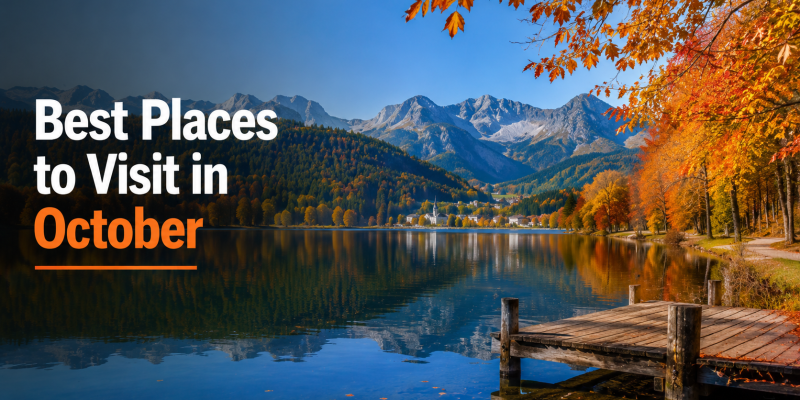
Traveling in October provides an exceptional intersection of seasonal transition, decreased tourist density, and optimal operational climates. Historically referenced by the Saxons as Wintirfyllith (Winter Full Moon) to mark the onset of the winter cycle, October hosts some of the most dramatic environmental changes across both hemispheres.
For the Northern Hemisphere, it heralds the peak deceleration of chlorophyll production, turning deciduous forests into vibrant canopies of gold, amber, and rust. Meanwhile, the Southern Hemisphere experiences a spring awakening, offering temperate conditions ideal for wilderness exploration. From the micro-climates of New England to the ancient stone structures of Petra, this global architectural and climatic travel brief details the twenty premier destinations optimized for October routing.

Technical Mechanics: Photoperiodism, Shoulder-Season Dynamics, and Auroral Physics
Optimizing international travel pathways during October requires an understanding of several distinct planetary and atmospheric systems.
                      [ GLOBAL CLIMATIC DYNAMICS ]
                                   │
         Earth Crosses the Autumnal Equinox (Late September)
                                   │
         ┌─────────────────────────┴─────────────────────────┐
         ▼                                                   ▼
┌─────────────────────────────────┐ ┌─────────────────────────────────┐
│   NORTHERN PHOTOPERIOD DECAY    │ │   SOUTHERN GEOMAGNETIC PEAKS    │
│ Triggers chlorophyll shutdown;   │ │ Equinox atmospheric patterns    │
│ Transitions destinations into   │ │ optimize auroral visibility     │
│ high-contrast shoulder windows. │ │ across high-latitude zones.     │
└────────────────┬────────────────┘ └────────────────┬────────────────┘
                 │                                   │
                 ▼                                   ▼
┌─────────────────────────────────────────────────────────────────────┐
│                  OPTIMIZED STRUCTURAL DATA TRAVEL                   │
│ - Symmetrical thermal dropping permits high-exertion foot travel.   │
│ - Reduced local mass tourism frees regional transportation hubs.     │
│ - Localized agricultural harvests stabilize regional food supply.   │
└─────────────────────────────────────────────────────────────────────┘
1. Photoperiodism and Anthocyanin Accumulation
The vibrant visual transformation of northern landscapes—famously termed Ruska in Finland and Kōyō in Japan—is driven by photoperiodism, the biological response of organisms to changing lengths of daily light. As daylight hours diminish, deciduous trees build an abscission layer at the base of their leaf stems, shutting down the production of green chlorophyll. This drop reveals existing yellow carotenoids and triggers the synthesis of red anthocyanin pigments, causing entire micro-regions like Vermont or Kyoto to burst into vivid red and gold hues.
2. The Shoulder-Season Mass-Tourism Vacuum
In highly targeted cultural capitals like Rome, Florence, and Provence, October marks the post-la rentrée stabilization window. As summer vacationing families return to work and academic schedules, destination density indexes plummet by up to 65%. This reduction in foot traffic frees local transport infrastructure and eliminates standard wait times at major landmarks like the Uffizi Gallery or the Colosseum, allowing travelers to explore complex archaeological environments without crowd disruption.
3. Equinoctial Auroral Magnification
Geophysical records maintained across 75 years confirm that geomagnetic disturbances in the Earth’s ionosphere hit a statistical peak during equinox months, specifically September and October. This structural atmospheric shifting increases both the frequency and brilliance of the Aurora Borealis. High-latitude regions like Finnish Lapland provide an ideal vantage point during this period, allowing stargazers to capture brilliant northern lights reflecting across open, unfrozen lakes before full winter ice coverage sets in.
 The Global Climatological & Geographic Matrix
This data ledger categorizes the operational climate bounds, geographical advantages, and primary features of the top 20 global destinations optimized for October exploration.
| Target Destination | Mean October Temperature Bounds | Climatological Profile | Primary Structural / Botanical Feature |
| 1. New England, USA | 10°C to 15°C (Day) / 0°C to 7°C (Night) | Crisp, dry post-equinox air; low humidity. | High-density sugar maple crimson foliage bands. |
| 2. Switzerland | 13°C to 15°C (Day) / 7°C (Night) | Mountainous; early alpine snow dustings. | Deep valley vineyard gold transitions; Désalpe cycles. |
| 3. Provence, France | 18°C to 20°C (Day) / Low Teens (Night) | Mild Mediterranean; passing autumn showers. | Post-la rentrée crowd vacuum; localized grape harvests. |
| 4. Tuscany, Italy | 15°C to 22°C (Day) / 10°C to 11°C (Night) | Soft, maritime-influenced fall cycles. | Active white truffle forest hunting; olive pressing. |
| 5. East Coast, Canada | 11°C to 14°C (Day) / 2°C to 4°C (Night) | Brisk Atlantic; leaf-crunching air. | Cabot Trail panoramic coastal foliage loops. |
| 6. Vienna, Austria | 11°C to 18°C (Day) / 4°C to 10°C (Night) | Clear continental; crisp, bright days. | Imperial park golden canopy over Schönbrunn Palace. |
| 7. Rome, Italy | 20°C to 23°C (Day) / 11°C to 14°C (Night) | Temperate maritime; short-lived showers. | Accessible open-air classical ruins; al fresco dining. |
| 8. Ireland | 10°C to 14°C (Day) / 5°C to 8°C (Night) | Dynamic maritime; rapid sun-to-rain shifts. | Ancient Samhain pagan roots at County Meath. |
| 9. Hawaii, USA | 26°C to 29°C (Day) / 20°C to 23°C (Night) | Tropical trade-wind; minimal rainfall. | Shoulder-season beach isolation; volcanic hiking tracks. |
| 10. Portugal | 20°C to 23°C (Day) / 14°C to 16°C (Night) | Mild Iberian; dry southern coast. | Douro Valley historical grape stomping festivals. |
| 11. Marrakech, Morocco | 27°C to 29°C (Day) / 15°C to 17°C (Night) | Semi-arid; bearable dry desert winds. | Olive-picking harvest season across the Medina. |
| 12. Finland | 9°C to 14°C (South) / Sub-0°C (Lapland) | Arctic edge; regular morning frosts. | Peak Ruska gold colors; equinox auroral activity. |
| 13. Kyoto, Japan | 16°C to 23°C (Day) / 11°C to 15°C (Night) | Balanced temperate; decreasing humidity. | Early Kōyō maple adjustments across temple zones. |
| 14. Petra, Jordan | 18°C to 27°C (Day) / 12°C to 14°C (Night) | Arid sandstone basin; forgiving winds. | Comfortable foot travel through the narrow Siq corridor. |
| 15. Andalusia, Spain | 17°C to 30°C (Day) / 12°C to 16°C (Night) | Warm Mediterranean; soft seasonal light. | Uncrowded Moorish architectural tours (Alhambra). |
| 16. Cape Town, SA | 15°C to 24°C (Day) / 11°C to 13°C (Night) | Southern hemisphere spring; warming lines. | Peak wild botanical flower blooms over Table Mountain. |
| 17. Romantic Road, Ger | 8°C to 14°C (Day) / 2°C to 6°C (Night) | Cool alpine foothills; misty mornings. | Walled Bavarian towns framed by amber oak woods. |
| 18. Istanbul, Türkiye | 14°C to 21°C (Day) / 10°C to 12°C (Night) | Maritime-continental blend; clear vistas. | Comfortable urban walking loops between active Bazaars. |
| 19. Greek Islands | 19°C to 24°C (Day) / 14°C to 16°C (Night) | Aegean mild sub-tropical; warm seawater. | Low-cost ferry schedules; empty whitewashed lanes. |
| 20. Patagonia | 6°C to 13°C (Day) / Sub-0°C to 3°C (Night) | Sub-polar spring; variable high winds. | Reopening of Torres del Paine glacial hiking trails. |
Architectural Breakdown of Top Regional Transit Corridors
                       [ SPECIALIST TRAVEL ARCHITECTURE ]
                                       │
         Balances heavy, uncrowded stone ruins with dynamic forest roads
                                       │
       ┌───────────────────────────────┼───────────────────────────────┐
       ▼                               ▼                               ▼
┌──────────────────┐           ┌──────────────────┐            ┌──────────────────┐
│ THE FOLIAGE LOOPS│           │ THE ANCIENT CORE │            │ THE RESORT OASIS │
│ - New England    │           │ - Rose-Red Petra │            │ - Algarve Coast  │
│   Autumn Highway │           │   Stone Tracking │            │   Crowd Clearing │
│ - Romantic Road  │           │ - Andalusian     │            │ - Aegean Basin   │
│   Bavarian Woods │           │   Moorish Hubs   │            │   Warm Seawater  │
└──────────────────┘           └──────────────────┘            └──────────────────┘
1. The Deciduous Foliage Drives: New England & The Romantic Road
Navigating high-density forest loops during peak autumn requires meticulous timing. In New England, state routes crossing Vermont and New Hampshire reveal a high concentration of sugar maples that turn a brilliant, fiery crimson. This classic foliage display is mirrored in Europe along Germany’s Romantic Road, where the 400-kilometer path from Würzburg to the Bavarian Alps winds past medieval walled towns like Rothenburg ob der Tauber. The surrounding oak and beech forests turn deep shades of amber and rust, creating a striking backdrop for fairytale structures like Neuschwanstein Castle.
2. Forgiving Climates for Ancient Stone: Petra & Andalusia
Sovereign archaeological ruins that suffer from intense, blistering heat during the summer months become exceptionally comfortable for walking tours in October. Jordan’s ancient Nabataean city of Petra experiences a significant drop in temperature, dropping the intense desert heat down to a manageable 27°C (81°F). This allows historians to trek through the narrow, high-walled Siq corridor to view the iconic treasury facade without thermal exhaustion. Similarly, southern Spain’s Andalusia enters a mild climate window, dropping the summer heat down to comfortable levels that are ideal for exploring the historic Moorish courtyards of the Alhambra in Granada or the Great Mosque of Córdoba.
3. The Uncrowded Maritime Basins: Rome, Portugal & The Greek Islands
For travelers looking to catch the last rays of summer sun without the stress of massive crowds, the Mediterranean and Aegean basins offer a refined, slower pace in October. In Provence and the Algarve coast of Portugal, the exit of peak summer crowds leaves major coastal landmarks entirely open to explore at a relaxed, leisurely pace. Farther east, popular destinations like Santorini and Mykonos scale back their high-density cruise ship rosters. This reduction in traffic means shorter lines, lower seasonal rates, and quieter whitewashed paths, while the surrounding sea waters retain enough summer warmth to remain perfect for swimming through late autumn.
Technical Security and Logistics Safeguards for Shoulder-Season Transit
When organizing cross-border travel itineraries during seasonal transition windows, logistics coordinators and travel managers must enforce strict dynamic safeguards:
Conclusion
The comprehensive global assessment of October’s premier travel destinations confirms that this transitional calendar window offers an unmatched balance of ideal weather and calm, uncrowded exploration. By using geographic insights to align travel dates with natural shifts—like chasing the vivid colors of Japan’s Kōyō leaves, catching the northern lights in Lapland, or enjoying the quiet historic streets of Rome—travelers can elevate their journeys far beyond standard off-season vacations, a seasonal mastery tracked closely by senior editors at Insight Vacations.
As global weather patterns continue to evolve and modern transit networks adjust their seasonal schedules, the core strategy for successful travel remains clear: matching precise climatological data with deep geographic awareness ensures that every autumn journey unfolds with absolute safety, cultural depth, and flawless execution.
Also Read :A Regional Analysis of Northern vs. Southern Italy